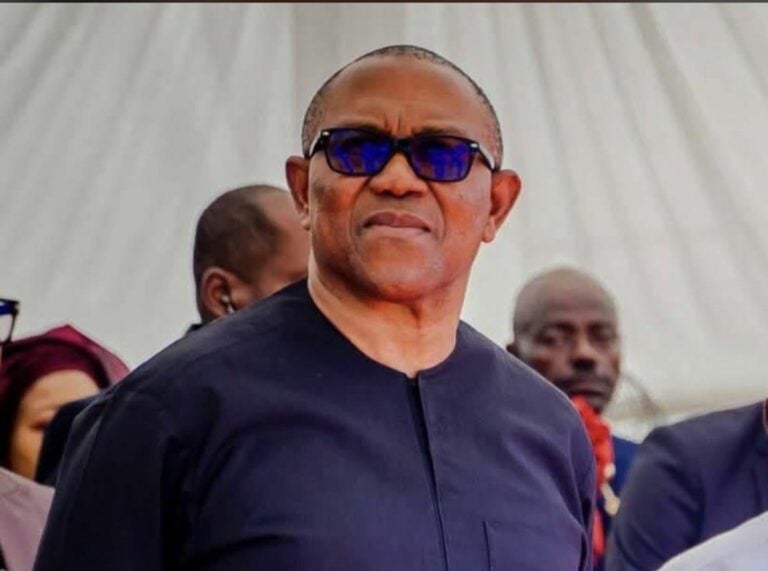
Peter Obi has departed the African Democratic Congress (ADC) barely two months after joining it, triggering fresh questions about the viability of opposition unity against President Bola Tinubu in the 2027 presidential election. The former Labour Party presidential candidate, alongside Rabiu Musa Kwankwaso, moved to the newly prominent Nigeria Democratic Congress (NDC), citing internal crises and litigation in the ADC.
Bolaji Abdullahi, National Publicity Secretary of the ADC, described Obi’s departure as premeditated rather than a sudden reaction to last weekend’s events. In a pointed interview on Arise TV, Abdullahi revealed that Obi, Kwankwaso, and former Bayelsa Governor Seriake Dickson held a strategic meeting in Kano about two months ago. He expressed concerns at the time that parallel platforms could fracture the opposition and inadvertently strengthen the ruling All Progressives Congress (APC).
According to Abdullahi, the ADC had been building a broad coalition for nearly two years. Obi delayed his formal entry for six months, repeatedly demanding assurances on zoning and other pre-conditions that the coalition could not guarantee. The party positioned itself as a platform for negotiation among equals rather than a vehicle dominated by one individual. Abdullahi claimed Obi was granted unusual concessions, including the appointment of one of his allies as National Organising Secretary — a critical role overseeing primaries, congresses, and internal elections.
The ADC official argued that Obi thrives better in a structure where a single leader can directly guarantee a presidential ticket, contrasting it with the give-and-take required in a genuine multi-leader coalition. He suggested the former Anambra governor’s move to the NDC reflects a preference for an environment promising clearer control and assurances. Abdullahi also questioned whether Kwankwaso’s involvement had always been intended to create an alternative path, likening it to a “Trojan horse” dynamic.
This development occurs against the backdrop of Nigeria’s volatile opposition politics. After the 2023 elections, where Obi’s Labour Party campaign energised millions of young voters with messages of competence and frugality, major opposition figures have struggled to forge a stable alliance. Atiku Abubakar of the PDP, Obi, and Kwankwaso have circled each other in various configurations. The ADC briefly emerged as a promising platform after INEC issues with older parties, attracting hundreds of thousands of new members drawn by the star power of these leaders.
Context of Shifting Alliances
Nigerian politics has long been defined by fluid loyalties, court battles over party leadership, and the dominance of personal networks over ideology. The ADC itself has faced litigation, a common feature that has weakened several opposition efforts in the past. Obi’s track record includes moves from APGA to PDP, then Labour Party, ADC, and now NDC — each justified by the need for a platform aligned with his vision of governance. Kwankwaso, a formidable force in Kano politics with his Kwankwasiyya movement, brings significant northern leverage.
The timing is critical. With the 2027 polls approaching, opposition parties must consolidate quickly to challenge the APC’s incumbency advantages, including control of state structures and resources. Fragmentation risks repeating the 2023 outcome, where divided opposition votes arguably helped secure Tinubu’s victory despite strong anti-APC sentiment in many regions.
A deeper look reveals the structural challenge facing Nigerian opposition politics: balancing the ambitions of “big egos” and regional power bases while building a coherent national platform. Consensus-building in such environments demands patience, compromise, and inspirational leadership — qualities tested when high-profile figures feel their paths to the ticket are not assured. Obi’s exit, while a setback for the ADC, does not appear fatal according to party insiders, but it underscores how personal calculations can overshadow collective strategy.
The move to the NDC, where Obi and Kwankwaso have reportedly received warmer assurances, could reshape the opposition landscape if it attracts other defectors or stabilises without the same level of litigation. However, it also highlights the recurring difficulty of forging a truly national coalition that transcends individual interests.
As Nigeria heads toward another decisive electoral cycle, the real test will be whether these shifting alliances produce a formidable challenge capable of addressing the nation’s pressing economic and security concerns, or merely recycle familiar faces in new vehicles. The coming months will determine if opposition leaders can finally prioritise unity over personal positioning.
We’ve got the edge. Get real-time reports, breaking scoops, and exclusive angles delivered straight to your phone. Don’t settle for stale news. Join NaijaChoice NEWS on WhatsApp for 24/7 updates →
Join Our WhatsApp Channel