Nigeria must prioritise education or risk falling further behind, former Anambra State Governor and Labour Party presidential candidate, Mr Peter Obi, has warned.
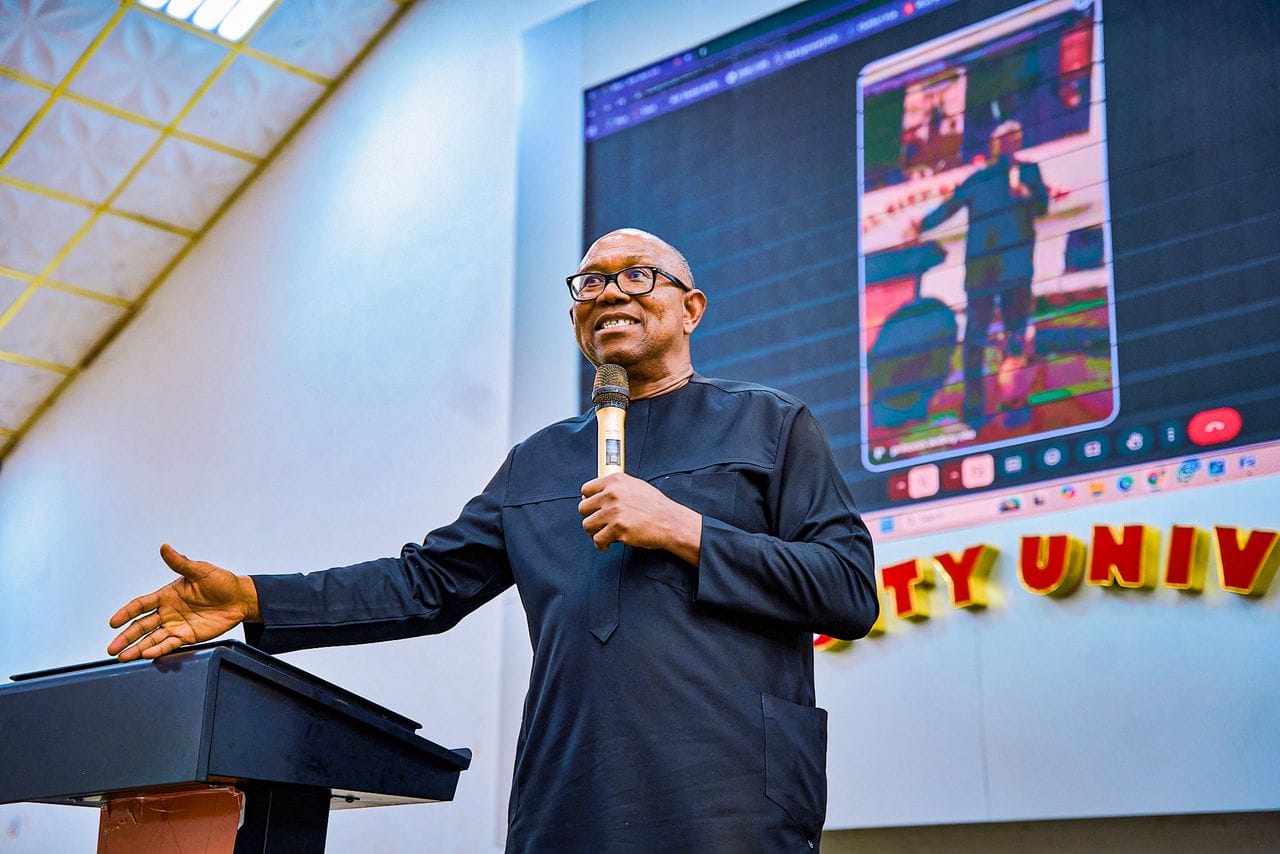
NaijaChoice News reports that Obi delivered this strong message yesterday during a public lecture at Coal City University in Enugu. The topic of the lecture was “Repositioning Nigeria’s Education Sector for National Growth and Global Competitiveness.”
While addressing students, lecturers and stakeholders at the fourth edition of the university’s distinguished speaker series, Obi commended the Vice-Chancellor and management of Coal City University for their commitment to academic excellence and for creating a platform for honest national discourse.
“No nation rises above the quality of its education system,” Obi declared. He pointed out that Nigeria’s low Human Development Index (HDI) score and high unemployment levels are direct results of chronic underinvestment in education and human capital.
According to recent data, Nigeria’s HDI stands at 0.560, placing the country in the medium human development category but still ranking very low globally at around 164th position. Youth unemployment and underemployment remain a major challenge, while life expectancy hovers between 50 and 55 years in many estimates. Adult literacy rate is approximately 70 per cent nationally, though with wide gaps between states – some southern states above 90 per cent while certain northern areas fall below 10 per cent.
Obi contrasted Nigeria’s situation with peer nations like Indonesia (HDI 0.728), Egypt (0.754) and South Africa (0.741). These countries boast higher life expectancy above 65-71 years, stronger literacy levels, and per capita incomes well above $3,500, compared to Nigeria’s roughly $1,000. He attributed their better performance to consistent investment in education, healthcare and human capital development over many years.
The Labour Party chieftain criticised Nigeria’s education budget allocation, noting that it has consistently fallen below the global benchmark of 15-20 per cent recommended by UNESCO. Although the federal government increased education spending to ₦3.52 trillion in 2025 and maintained a similar figure in the 2026 proposal, this still represents only about 6 per cent of the total national budget – far from what experts say is needed to fix decaying infrastructure, train teachers and equip students for a competitive world.
“Many states are also not doing enough. While some South-East states like Enugu under Governor Peter Mbah have allocated over 30 per cent of their budgets to education, others lag behind,” Obi added, urging a total review of the funding model.
He called for stronger public-private partnerships and inclusive policies that recognise the contributions of private universities. Obi specifically questioned the exclusion of private institutions from interventions like TETFund, arguing that they are actively helping to build national capacity.
“Education is not charity; it is the foundation of national growth and the gateway to global competitiveness,” the former governor stated emphatically.
Obi concluded that with deliberate and sustained investment in education and human capital, “a new Nigeria is not only possible – it is inevitable.”
NaijaChoice News gathered that the lecture sparked lively discussions among participants, with many calling on federal and state governments to treat education as a national emergency. Stakeholders urged immediate action to address out-of-school children, improve teacher quality and align curricula with 21st-century skills.
As Nigeria continues to grapple with economic hardships and global competition, Obi’s message at Coal City University serves as a timely reminder: without fixing the education sector, the country risks falling even further behind its contemporaries.
We’ve got the edge. Get real-time reports, breaking scoops, and exclusive angles delivered straight to your phone. Don’t settle for stale news. Join NaijaChoice NEWS on WhatsApp for 24/7 updates →
Join Our WhatsApp Channel