In one week in May, the Islamic State West Africa Province (ISWAP) went from being the most active wing of the global Islamic State group, claiming more attacks than any other affiliate, to an organization in crisis.
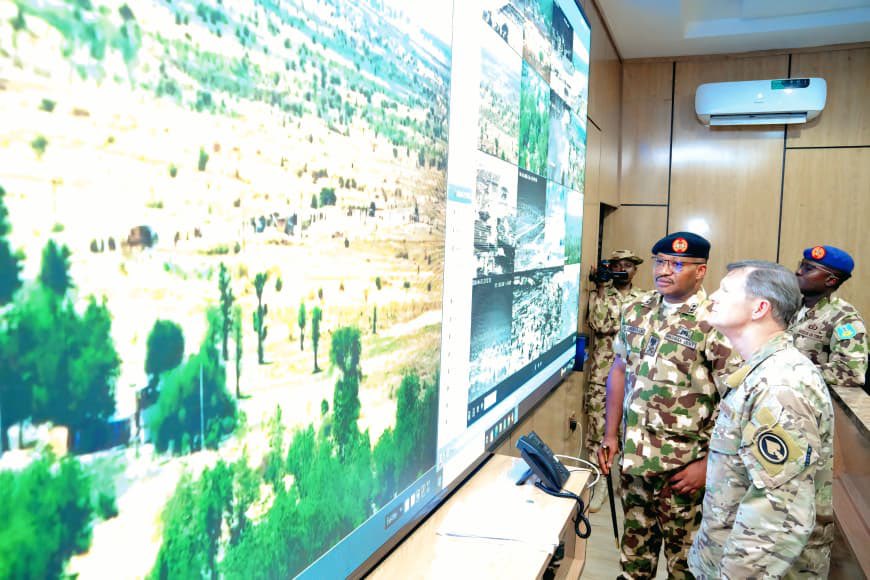
After months of intelligence gathering, the joint forces of Nigeria and the United States conducted a nighttime raid on May 16 that killed Abu-Bilal al-Minuki, one of the group’s most senior leaders, in a hidden compound near the town of Metele in the Lake Chad Basin. The highly coordinated assault also eliminated some of the group’s other top leaders and destroyed critical logistical infrastructure.
In the aftermath of such a blow to the terror group’s leadership, Nigerian armed forces have maintained intense pressure on ISWAP, which has led to infighting, mass surrenders and the defections of other senior leaders.
Intelligence-driven success
Nigerian security analyst Zagazola Makama called the operation one of the most consequential counterterrorism successes in the conflict’s history, and a prime example of how intelligence-led warfare increasingly is the decisive factor.
“It reflects the growing maturity of intelligence-led warfare and demonstrates how sustained cooperation among intelligence agencies, military forces and international partners can significantly alter the trajectory of an insurgency,” he told ADF.
Operation Hadin Kai, the Nigerian military’s counterinsurgency campaign against ISWAP and Boko Haram in the northeast, has continued to apply pressure in the weeks since al-Minuki’s death. Troops have dismantled terrorist strongholds and command and logistics hubs, freed dozens of hostages, and debriefed dozens more ISWAP fighters who have surrendered.
“Persistent military operations have continued to degrade the terrorists’ combat capabilities while eroding confidence within their ranks and leadership,” Hadin Kai’s acting information officer Capt. Mohammed Goni said in a June 29 statement. “Within the last week alone, a total of 76 terrorist foot soldiers with some families surrendered to troops.”
Makama said the elimination of ISWAP’s senior leadership impacts every element of the insurgency: logistics and coordination, financing, recruitment, communications and security architecture.
“The removal of individuals occupying these functions can create organizational disruption that takes months or years to repair,” he said. “Intelligence reporting following the operation suggested growing distrust within surviving ISWAP ranks, increased concern regarding intelligence penetration and uncertainty over future leadership arrangements.”
Aliyu Dahiru, assistant editor of Nigerian website HumAngle, agreed that the death of al-Minuki will have a ripple effect on the Islamic State’s global leadership, operations and movements.
“The joint U.S.-Nigeria strike that killed al-Minuki demonstrated a targeting capability that ISWAP had not previously faced at this intensity in the Lake Chad theatre,” he wrote in a June 10 article. “The use of American intelligence assets alongside Nigerian special forces created a surveillance environment that makes the movement of senior figures, especially those arriving from abroad, significantly more dangerous than before.”
ISWAP’s internal strife
The killing of al-Minuki exposed a rift between Nigerian and foreign fighters and reportedly has led to a major change of tactics away from pursuing the help of experienced Islamic State fighters and operatives from the Middle East.
Some of the most important intelligence gathered by Nigerian and U.S. forces came from within ISWAP, according to Malik Samuel, an analyst with Pan-African research organization Good Governance Africa.
“Despite his elaborate efforts to conceal his presence, al-Minuki was ultimately betrayed by his own, both foreign and local fighters,” he wrote in a June 16 article. “This betrayal has sown panic within ISWAP’s leadership, particularly given the widening chasm between commanders and rank-and-file fighters over issues of welfare and resource distribution.”
Reports that some ISWAP fighters may have leaked information leading to al-Minuki’s death point to internal discontent over the unequal treatment of foreign and local fighters. The May 18 edition of the Islamic State’s Al-Naba newsletter noted that concerns over priority given to foreign fighters has led to a major strategic shift.
“ISWAP has announced that the flow of fighters migrating from Iraq and Syria to Nigeria has been effectively paused,” HumAngle reported in a June 10 article. “For years, the Islamic State’s call for migration to Africa was one of ISWAP’s most reliable sources of experienced foreign fighters. Foreign fighters who had trained and fought in the central theatre arrived in Lake Chad with tactical knowledge, ideological authority and direct personal connections to IS central command.”
We’ve got the edge. Get real-time reports, breaking scoops, and exclusive angles delivered straight to your phone. Don’t settle for stale news. Join NaijaChoice NEWS on WhatsApp for 24/7 updates →
Join Our WhatsApp Channel