First Lady Oluremi Tinubu Leads by Example in Push for Household Food Production as Hunger Looms
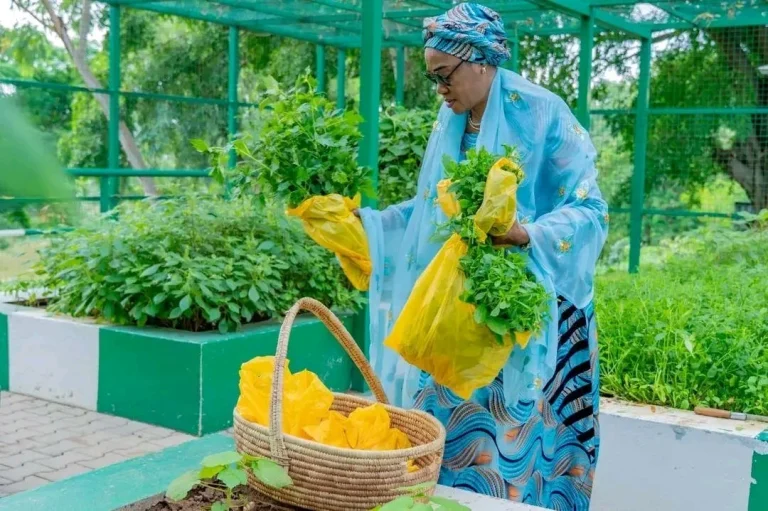
Nigeria’s First Lady, Senator Oluremi Tinubu, has once again turned to the Presidential Villa garden in Abuja to harvest fresh vegetables, using the moment to spotlight practical steps ordinary citizens can take toward greater self-reliance amid the country’s deepening food security challenges.
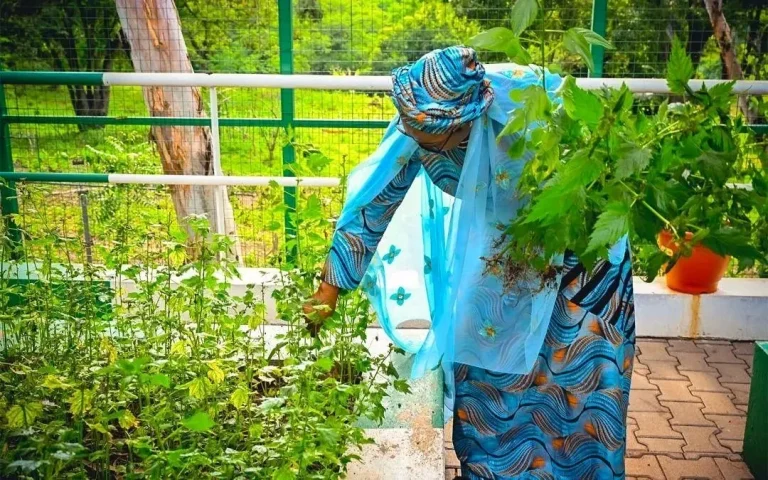
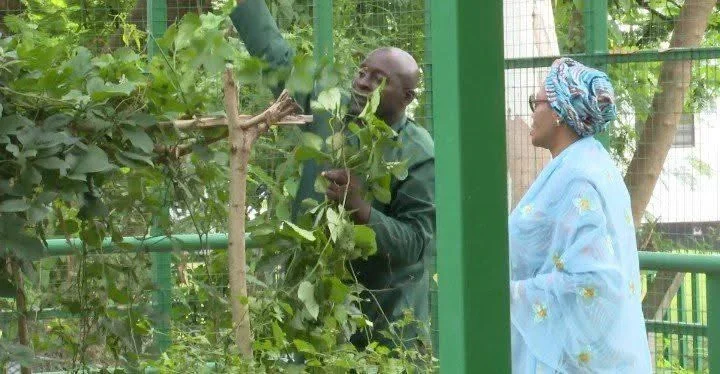
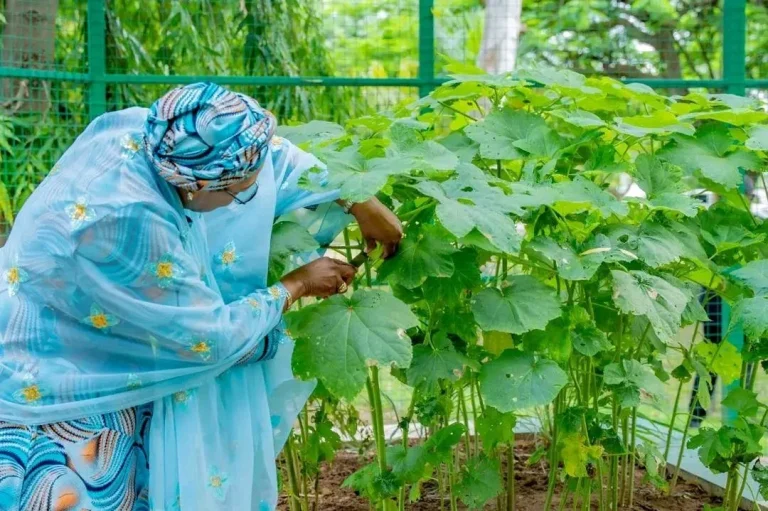
On Monday, the senator visited the vegetable plot she established nearly two years ago, gathering produce including spinach, water leaf, and fluted pumpkin (ugwu). She shared portions with members of her staff, emphasising the dual benefits of home gardening: improved nutrition and the spirit of community sharing.
The garden forms a central pillar of the “Every Home a Garden” initiative under her Renewed Hope Initiative (RHI). Launched alongside a national competition that rewarded participants, the project encourages women and families nationwide to cultivate small plots in their compounds or available spaces using simple techniques suitable for urban and rural settings alike.
Senator Tinubu, a former senator representing Lagos Central, has consistently positioned this drive as more than a personal hobby. It demonstrates that even modest household spaces can yield nutritious food, helping to cut feeding costs and reduce dependence on volatile markets. The initiative gained traction after its formal unveiling in 2024, with state-level adaptations and competitions that awarded grants and inputs to successful gardeners.
Nigeria currently grapples with severe food insecurity driven by multiple pressures. Projections indicate that up to 35 million Nigerians could face acute hunger during the 2026 lean season, exacerbated by conflict in the north, climate variability, economic constraints, and high inflation that has pushed food prices beyond the reach of many families. In this environment, large-scale commercial farming alone cannot close the gap quickly enough, making household-level production a critical supplementary strategy.
The First Lady’s garden, now producing reliably after two years, serves as a living model. It showcases climate-smart practices that conserve water and build resilience in the face of erratic rainfall patterns increasingly common across the country. Vegetables like those harvested are rich in essential nutrients, addressing not just calorie deficits but also widespread malnutrition challenges, particularly among children.
Broader Context and Institutional Support
Oluremi Tinubu’s advocacy aligns with national efforts to diversify food systems beyond reliance on rain-fed agriculture in conflict-prone regions. Her RHI has partnered with various stakeholders to distribute farm inputs and support women-led gardening projects, extending the message from the Villa to communities in states like Lagos, Oyo, and Delta.
Experts note that home gardens can significantly ease pressure on household budgets when food inflation hovers at elevated levels. They also promote environmental sustainability by encouraging organic methods and reducing the carbon footprint associated with transporting produce over long distances.
This latest harvest comes at a time when many Nigerians are seeking affordable ways to cope with economic realities. By sharing the produce, the First Lady reinforced a message of compassion and collective responsibility — values that could strengthen social safety nets at the grassroots level.
Implications for National Food Strategy
The sustained success of the Villa garden highlights the potential scalability of such initiatives. If adopted widely, household gardening could contribute meaningfully to reducing the number of people requiring emergency food assistance, complementing larger government and humanitarian programmes. It also offers a pathway for urban dwellers, who often face higher food costs and limited access to farmland, to participate actively in national food production efforts.
As Nigeria confronts one of its most challenging periods for food and nutrition security, practical demonstrations like this underscore the role of leadership in modelling solutions that are accessible, replicable, and culturally resonant.
Senator Oluremi Tinubu’s continued commitment to the Every Home a Garden vision reinforces a simple yet powerful truth: meaningful progress on food security begins with what citizens can cultivate in their own backyards.
We’ve got the edge. Get real-time reports, breaking scoops, and exclusive angles delivered straight to your phone. Don’t settle for stale news. Join NaijaChoice NEWS on WhatsApp for 24/7 updates →
Join Our WhatsApp Channel