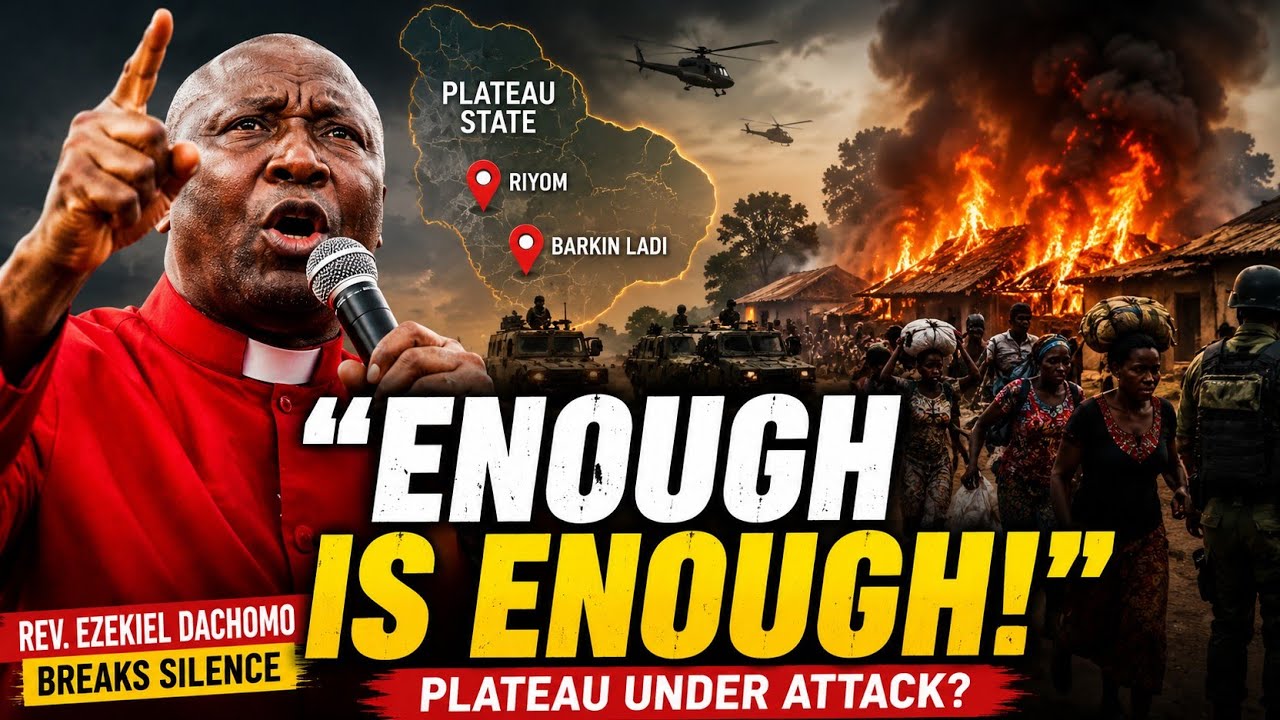
Plateau Residents Urged to Form Militias as Fresh Attacks Deepen Security Crisis
Rev. Ezekiel Dachomo has openly called on communities in Plateau State to establish local militias, citing repeated deadly assaults and what he sees as the failure of conventional security forces to protect vulnerable villages. The cleric’s remarks, coming after fresh attacks in Ta-Hoss community in Riyom Local Government Area and Sabon Layi in Barkin Ladi LGA, reflect growing desperation among residents who have endured years of violence.
Dachomo expressed deep frustration with the level of protection offered by security agencies, arguing that communities can no longer wait passively for help that often arrives too late. He urged stronger self-help measures to defend lives and property in the face of persistent threats from gunmen.
The latest incidents add to a long trail of bloodshed in Plateau, a state that has become a symbol of Nigeria’s complex security challenges in the Middle Belt. Farmer-herder clashes, ethnic tensions, and suspected banditry have claimed hundreds of lives over the past decade, displacing thousands and destroying livelihoods. Ta-Hoss and areas around Barkin Ladi have repeatedly come under attack, with residents often accusing security forces of being overstretched, slow to respond, or in some cases compromised.
Rev. Dachomo, a prominent voice from the Christian community in the region, has been vocal on issues of insecurity and the protection of indigenous populations. His latest intervention has ignited heated national conversations. While many citizens, particularly in affected rural areas, support the idea of community-based defence initiatives, others caution that such groups must remain strictly within constitutional bounds to avoid escalating violence or creating new armed factions.
The Nigerian military has consistently rejected claims of infiltration or complicity in the security failures, insisting that operations against criminals and terrorists continue across the region. Independent verification of specific allegations remains difficult amid the fog of conflict, but the pattern of recurring attacks has eroded public confidence in official security arrangements.
Plateau State sits at the heart of Nigeria’s food-producing belt, and the unending violence there carries wider implications for national stability and agricultural output. Successive administrations have deployed special military task forces and promised peace initiatives, yet sustainable calm has remained elusive. The cycle of attack and reprisal continues to strain inter-ethnic and inter-religious relations in a state once celebrated for its diversity.
Community militias or vigilante groups are not new in Nigeria. In regions like the Northeast and Northwest, local defence networks have sometimes complemented formal forces, but they have also been linked to human rights concerns and command-and-control problems. Any push for expanded community security structures in Plateau would require clear guidelines, coordination with state authorities, and robust oversight to prevent abuse or politicisation.
The renewed call by Rev. Dachomo underscores a deeper governance challenge: the distance between citizens’ expectations of safety and the capacity of national institutions to deliver it consistently. As Plateau grapples with yet another wave of violence, the pressure is mounting on both federal and state governments to address root causes—ranging from disputes over land and resources to the proliferation of small arms—beyond temporary military deployments.
Effective, lawful, and coordinated security remains the most viable path to lasting peace in the troubled region. Until tangible results emerge on the ground, voices like Rev. Dachomo’s will continue to resonate with communities that feel abandoned.
We’ve got the edge. Get real-time reports, breaking scoops, and exclusive angles delivered straight to your phone. Don’t settle for stale news. Join NaijaChoice NEWS on WhatsApp for 24/7 updates →
Join Our WhatsApp Channel