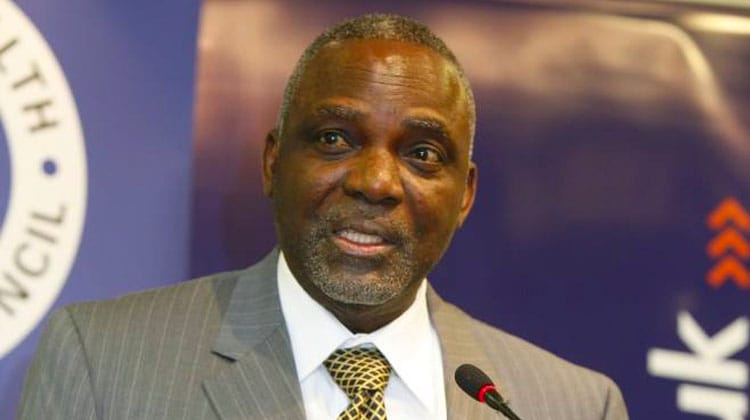
LAGOS, NIGERIA — Former Minister of Power, Prof. Barth Nnaji, has blamed policy inconsistency and the sudden scrapping of a key financing framework for the lack of new major power plants in Nigeria over the past 11 years.
Nnaji made the assessment on Monday while speaking at the 2026 conference of the Nigerian Association for Energy Economics in Lagos. He addressed critical issues affecting the sector, including the future of the country’s energy mix and persistent financing challenges.
According to the former minister, Nigeria had started attracting significant global capital into electricity generation through a government-backed partial risk guarantee instrument introduced during his tenure. The framework, developed jointly with the then Minister of Finance, Dr Ngozi Okonjo-Iweala, was designed to de-risk investments and make power projects bankable for international lenders.
Nnaji noted that the initiative was already producing results, with companies advancing projects and the Azura Edo power plant securing financing under the arrangement. However, the mechanism was abruptly discontinued after a change in government, halting the inflow of investments.
“Till today, we have not financed any new major power plant in Nigeria. That’s about 11 years ago,” he said.
The professor described the development as a clear example of how policy reversals undermine progress in the power sector. He stressed that consistent government policy and political will remain crucial to unlocking investment in electricity infrastructure.
Nnaji also called for a pragmatic approach to energy transition, pointing to the Russia-Ukraine war as a wake-up call. He observed that European countries, which had pushed aggressively for renewables, quickly reverted to coal when faced with energy shortages, with Germany leading the shift.
For Nigeria, he advocated leveraging the country’s vast natural gas reserves as the backbone of power generation for the next two decades. With over 210 trillion cubic feet of gas, the former minister said the resource offers a realistic path to economic development, provided the right infrastructure is built.
He however lamented the current underutilisation of gas assets, noting that the Nigeria LNG (NLNG) plant operates at only about 60 percent capacity due to gas supply constraints.
On hydropower, Nnaji described the long-delayed Mambilla Power Plant project, which has remained on the drawing board for over 40 years, as a symbol of Nigeria’s struggle with project execution despite technical feasibility.
President of the Nigerian Association for Energy Economics, Hassan Mahmud, echoed concerns about execution gaps across Africa. He noted that over 600 million Africans lack electricity access while nearly one billion still depend on biomass for cooking, despite abundant resources.
Mahmud added that Nigeria’s installed capacity of around 13,000 MW only delivers an average of 4,000 to 5,000 MW due to gas supply issues, weak infrastructure, and market constraints.
NaijaChoice News reports that stakeholders at the conference emphasised the urgent need for sustained policy direction, infrastructure investment, and regulatory reforms on tariffs, metering, and energy theft to bridge the wide gap between Nigeria’s energy potential and actual delivery.
The insights from Nnaji and industry leaders underscore the critical role of policy stability in transforming Nigeria’s power sector and driving broader economic growth.
We’ve got the edge. Get real-time reports, breaking scoops, and exclusive angles delivered straight to your phone. Don’t settle for stale news. Join NaijaChoice NEWS on WhatsApp for 24/7 updates →
Join Our WhatsApp Channel