Nigeria’s former Minister of Information and Culture, Alhaji Lai Mohammed, has dismissed international claims of a state-sponsored or targeted genocide against Christians in Nigeria, describing such narratives as “fake news.”
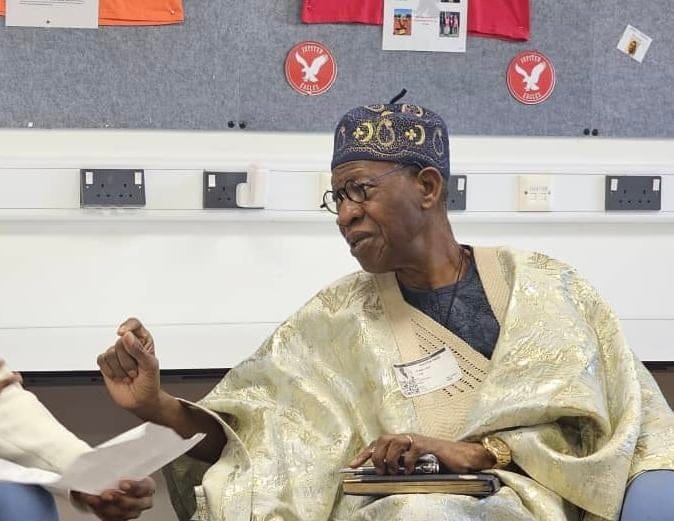
Speaking on Wednesday during an interactive session with students at Abbey College, Cambridge, the former minister argued that the country’s security challenges are rooted in complex socio-economic factors rather than a deliberate campaign to eliminate any specific faith.
The session, which focused on Nigerian governance and youth participation, saw Mohammed fielding questions on the persistent reports of religious persecution. He maintained that the global community requires a deeper understanding of the local context behind the violence.
According to reports monitored by NaijaChoice News, Mohammed pointed out that the insurgent group Boko Haram initially launched its revolt against fellow Muslims who embraced Western education. He noted that the group’s name itself signifies an opposition to conventional schooling, making educated Muslims primary targets.
“At the beginning, the victims of Boko Haram were largely Muslims, not Christians,” Mohammed stated, explaining that the group only expanded its attacks to include Christians to gain more international traction and stir public uproar.
Addressing the issue of banditry in the North-West, the former minister noted that both the perpetrators and the majority of victims share the same ethnic and religious backgrounds. He cited records indicating that Muslims currently account for the highest number of victims of insurgent attacks in the country.
Mohammed further highlighted Nigeria’s long-standing culture of religious tolerance and intermarriage. He specifically referenced the household of President Bola Tinubu, a Muslim whose wife, Senator Oluremi Tinubu, is a high-ranking pastor in the Redeemed Christian Church of God (RCCG).
The former minister stressed that the average Nigerian is more concerned with economic stability and quality of life than theological disputes. He urged the government and stakeholders to use proactive public communication to challenge narratives that suggest a religious war.
The remarks come at a time when Nigeria continues to grapple with multifaceted security threats, ranging from insurgency in the North-East to kidnapping and banditry in other regions.
The intervention by the former government spokesperson underscores the ongoing debate over how Nigeria’s internal security crisis is perceived and reported on the global stage.
We’ve got the edge. Get real-time reports, breaking scoops, and exclusive angles delivered straight to your phone. Don’t settle for stale news. Join NaijaChoice NEWS on WhatsApp for 24/7 updates →
Join Our WhatsApp Channel