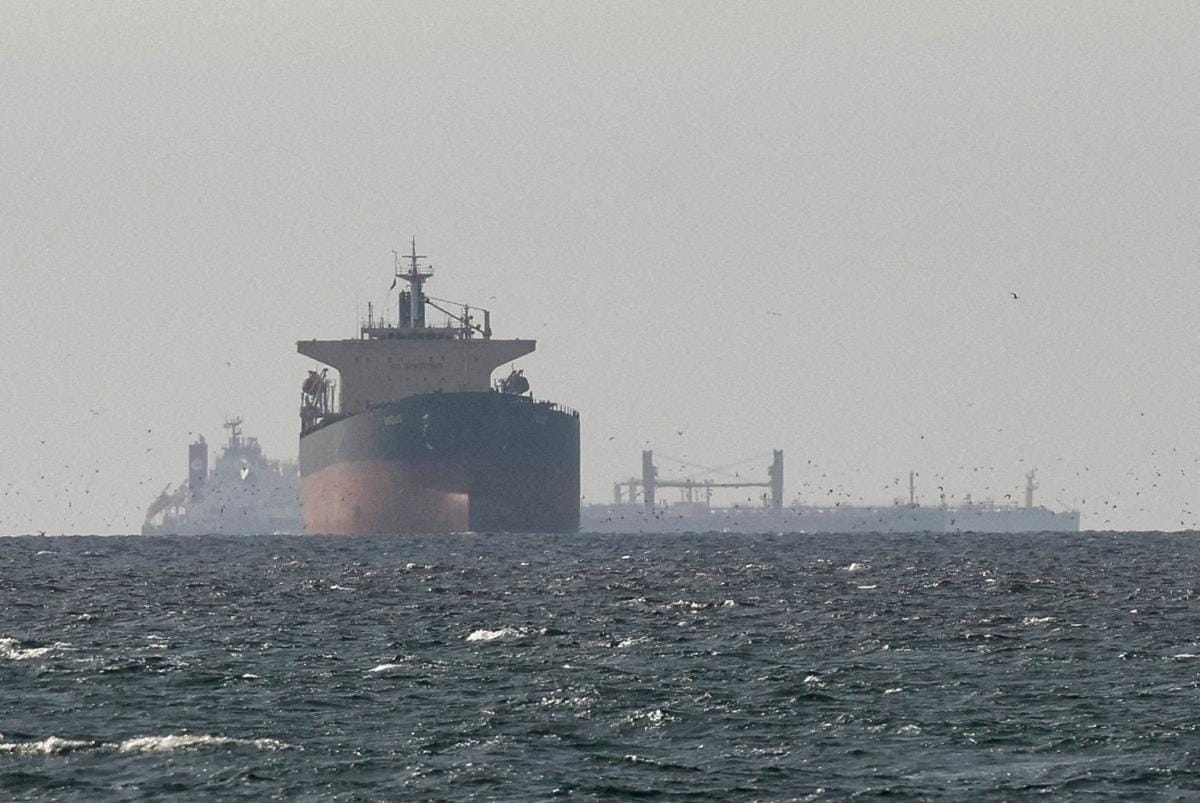
Two gunboats linked to Iran’s Islamic Revolutionary Guard Corps opened fire on a tanker in the Gulf of Oman early Saturday, triggering fresh alarm over shipping safety near the Strait of Hormuz.
The United Kingdom Maritime Trade Operations Centre said the attack took place about 20 nautical miles northeast of Oman at roughly 09:20 UTC on April 18. All crew members were reported safe, though a distress call captured by ship trackers showed the tanker’s crew pleading with Iranian forces for permission to turn back after claiming they had received prior clearance to cross.
A second vessel, a container ship, was hit by an unknown projectile around 11:25 UTC in the same area, sustaining damage to several containers but no fire or crew injuries, according to its security officer.
India’s External Affairs Ministry responded swiftly, summoning Iran’s ambassador in New Delhi on Saturday night to register “deep concern” over the shooting incidents involving two Indian-flagged ships. New Delhi’s foreign secretary pressed Tehran to resume safe passage for India-bound vessels through the contested waterway.
The attacks occurred just hours after Iran’s navy broadcast radio warnings that the Strait of Hormuz had been closed again to civilian traffic. Iranian officials cited the ongoing United States naval blockade of Iranian ports as the reason for re-imposing restrictions.
Tehran had declared the strait “fully open” on April 8 following a Lebanon ceasefire, but reversed course on April 18 after Washington expanded its blockade under President Donald Trump. Trump has insisted the measures will remain until a broader peace deal is secured with Iran.
NaijaChoice News understands the latest flare-up risks further disruption to global oil flows through the narrow chokepoint, which handles about one-fifth of the world’s petroleum. For Nigeria, a major crude exporter, any sustained spike in international oil prices could swell government revenues but also drive up the cost of imported refined products, worsening inflation and pressure on the naira.
Local importers and economists are already watching freight rates and landing costs closely, warning that prolonged instability in the Gulf could ripple into higher pump prices and tighter foreign exchange liquidity at home.
We’ve got the edge. Get real-time reports, breaking scoops, and exclusive angles delivered straight to your phone. Don’t settle for stale news. Join NaijaChoice NEWS on WhatsApp for 24/7 updates →
Join Our WhatsApp Channel