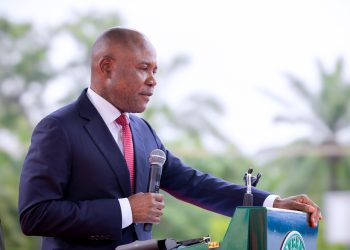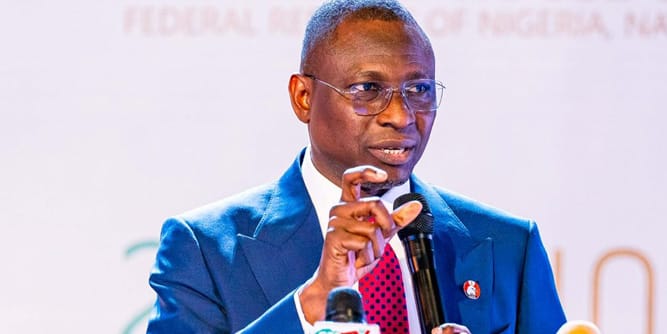
KANO, Nigeria — The Executive Chairman of the Economic and Financial Crimes Commission (EFCC), Olanipekun Olukoyede, has raised serious concern over the rising involvement of university students in cybercrime, disclosing that six out of every 10 undergraduates in Nigerian universities are now engaged in internet fraud.
Olukoyede made the revelation on Wednesday while addressing the 8th Biennial Conference of the Committee of Pro-Chancellors of State-Owned Universities in Nigeria, held in Kano. The conference, themed “Unlocking the Potentials of Artificial Intelligence: University Governance, Internationalization and Rankings,” provided a platform for discussions on technology and institutional integrity.
Describing the development as “a sad and disturbing situation,” the EFCC boss said findings from the commission’s investigations and field operations pointed to widespread participation of students in cybercrime activities. He noted that many of those recently arrested were undergraduates who had allegedly compromised academic standards by placing some lecturers on their payroll.
According to Olukoyede, his personal research over the past year confirmed the alarming statistic, reflecting deeper systemic weaknesses in university oversight and administration.
He cited a major EFCC operation in Lagos where 792 suspects linked to a transnational cybercrime syndicate were arrested, with a significant number being students. The operation, which leveraged artificial intelligence tools, exposed the growing sophistication of these criminal networks operating within and outside Nigeria.
The EFCC chairman also expressed worry over the emergence of “Yahoo Plus,” a variant where internet fraud is combined with fetish practices, further complicating law enforcement efforts.
Olukoyede called on pro-chancellors and university governing councils to act decisively by strengthening institutional controls and collaborating closely with security agencies to stem the tide. He urged them to embrace AI-driven governance systems to promote transparency, detect irregularities, and improve financial accountability.
He observed that many tertiary institutions still depend on manual processes, leaving them exposed to fraud such as ghost workers, inflated contracts, and diversion of public funds. “A university that lacks financial accountability cannot credibly train future professionals,” he stated, adding that the integrity of Nigerian universities is a matter of national security.
The EFCC boss advocated the strategic deployment of artificial intelligence in fraud detection, payroll management, procurement monitoring, and safeguarding academic integrity. He highlighted how the commission has successfully used AI for digital forensics and financial tracking in its operations.
Olukoyede, however, cautioned that AI must complement human oversight and comply with relevant laws, including data protection and procurement regulations. He stressed the need for capacity building in cybersecurity, machine learning, and digital governance across Nigerian universities.
As Nigeria grapples with the twin challenges of youth unemployment and technological advancement, the EFCC chairman’s warning underscores the urgent need for universities to harness AI not just for rankings and internationalization, but as a tool to protect institutional integrity and national development.
NaijaChoice News reports that stakeholders at the conference acknowledged the critical intersection between technology, education governance, and the fight against cybercrime in the country.
We’ve got the edge. Get real-time reports, breaking scoops, and exclusive angles delivered straight to your phone. Don’t settle for stale news. Join NaijaChoice NEWS on WhatsApp for 24/7 updates →
Join Our WhatsApp Channel