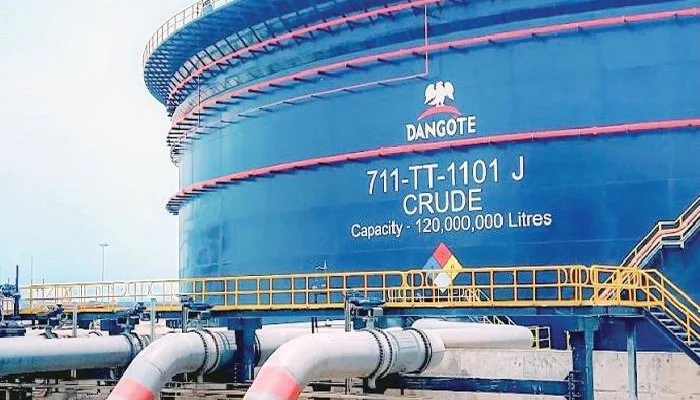
Dangote Petroleum Refinery has reduced the price of aviation fuel (Jet A1) from N1,750 to N1,650 per litre, delivering immediate relief to domestic carriers reeling from months of unsustainable costs. The move, announced on Monday, comes alongside a 30-day interest-free credit facility for marketers and operators, backed by bank guarantees, and a transition to naira-based pricing.
This intervention addresses a crisis that pushed Jet A1 prices from around N900 per litre before the escalation to between N2,700 and N3,300 in some cases. Airline Operators of Nigeria (AON) had warned of potential shutdowns, citing hikes disproportionate to international movements triggered by the US-Iran conflict and disruptions in global supply chains.
The Dangote Refinery, Africa’s largest with a 650,000 barrels per day capacity, has steadily ramped up operations since its gradual commissioning. Located in the Lekki Free Zone, Lagos, the facility represents one of Nigeria’s most ambitious efforts to achieve energy self-sufficiency after decades of heavy reliance on imported refined products. Its entry into Jet A1 production has begun reshaping supply dynamics in a market long dominated by imports and vulnerable to external shocks.
Aviation fuel typically accounts for a substantial portion of airline operating expenses in Nigeria. When prices skyrocketed earlier this year amid the Middle East tensions, carriers responded with fare increases and schedule adjustments. Many domestic operators faced thin margins, with some routes becoming barely viable. The AON had highlighted that local prices rose far beyond global benchmarks, putting pressure on everything from maintenance to crew costs and ultimately threatening connectivity across the country.
By shifting away from dollar-denominated pricing, Dangote is shielding buyers from exchange rate volatility that has compounded challenges for businesses since the naira floated. The interest-free credit window further eases cash flow pressures on airlines and marketers, allowing them to procure fuel without immediate capital strain in an environment where bank lending remains tight.
Nigeria’s aviation sector plays a critical role in connecting a vast country with challenging road infrastructure. Reliable and affordable air travel supports commerce, tourism, family ties, and emergency responses. Persistent high fuel costs had risked reduced flight frequencies, higher ticket prices that price out middle-class travellers, and potential job losses in an industry that already contends with regulatory hurdles, infrastructure deficits, and safety oversight demands.
This price reduction is expected to lower procurement costs for operators, improve cash flow, and create room for more stable flight schedules. It also signals the refinery’s growing influence as a domestic anchor supplier capable of responding to local market realities rather than purely international pricing signals. Industry stakeholders have long called for such measures to prevent the collapse of smaller carriers and maintain competition in the sector.
The development underscores the broader impact of Dangote’s refining capacity on multiple fronts. As the facility optimises output across products, it continues to demonstrate potential for moderating prices and enhancing supply security in petroleum-dependent sectors. While challenges such as crude supply consistency and distribution logistics remain, the refinery’s ability to adjust Jet A1 pricing swiftly highlights its strategic value in Nigeria’s economic landscape.
The Dangote Refinery’s decisive action provides a timely buffer for Nigeria’s aviation industry, potentially stabilising fares and operations at a moment when both economic pressures and geopolitical uncertainties continue to test resilience.
We’ve got the edge. Get real-time reports, breaking scoops, and exclusive angles delivered straight to your phone. Don’t settle for stale news. Join NaijaChoice NEWS on WhatsApp for 24/7 updates →
Join Our WhatsApp Channel