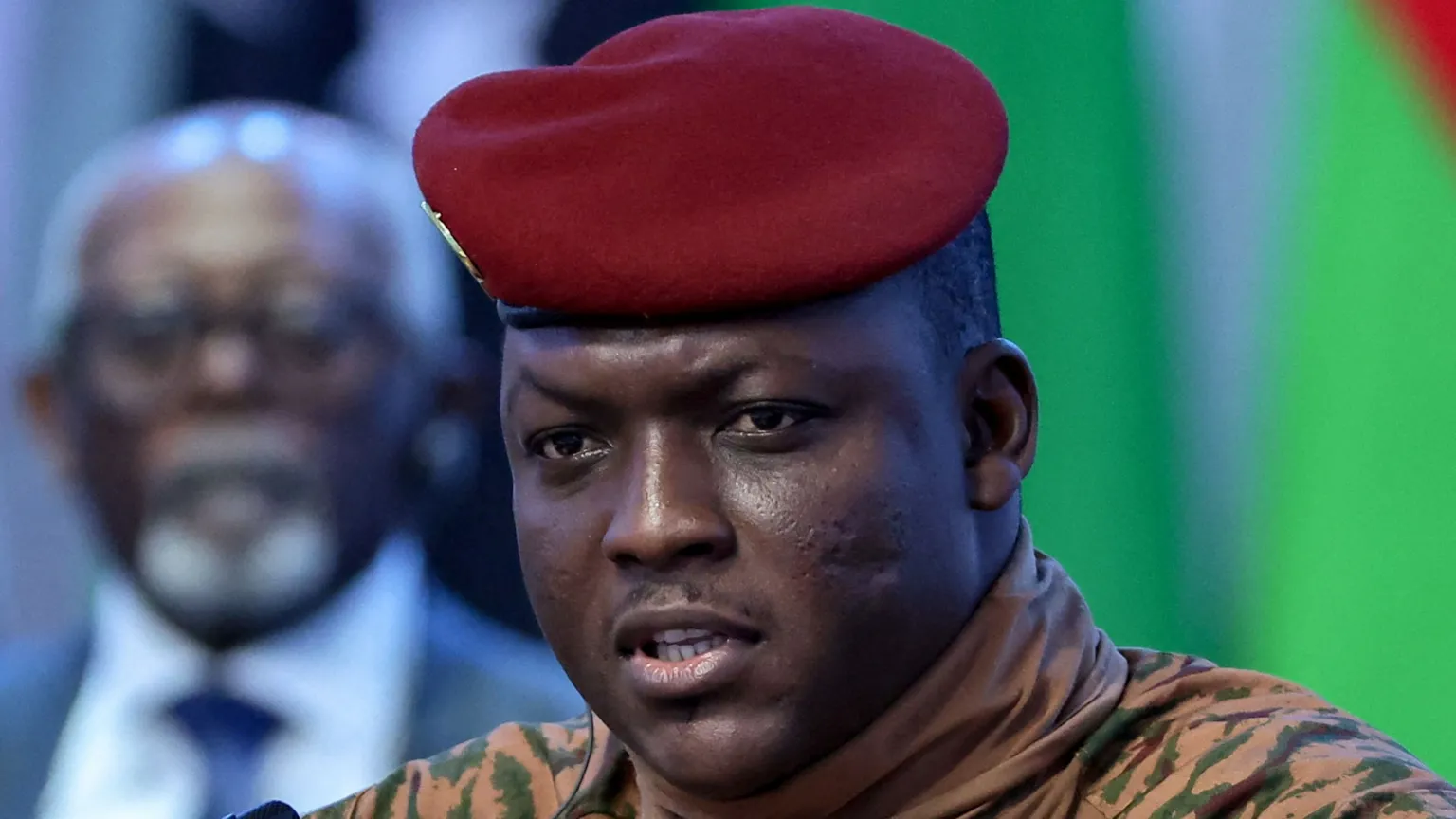
Captain Ibrahim Traoré, Burkina Faso’s military leader since his 2022 coup, made these blunt remarks in a recent interview broadcast on state television (around April 3, 2026). He stated that Burkinabè people must “forget about the issue of democracy,” calling it unsuitable for the country (“democracy is not for us”) and claiming it “kills.”
Key Points from Traoré’s Interview
He argued that political parties are divisive, dangerous, and full of “vices” like lying and sycophancy, incompatible with his “revolutionary project.”
Burkina Faso had already banned all political parties earlier in 2026 as part of “rebuilding the state,” and extended military rule by five years beyond the original 2024 transition pledge.
He cited Libya as a cautionary example: Western-backed intervention to impose democracy after Gaddafi led to bloodshed, chaos, and no stable elections. Traoré framed this as evidence that external pushes for democracy in Africa often bring violence and fail.
Instead of Western-style multiparty democracy or elections (which he said aren’t even on the table now), he advocated a homegrown “alternative approach” rooted in sovereignty, patriotism, revolutionary mobilization, traditional leaders, and grassroots structures. He emphasized economic and military self-reliance, hard work, and not copying foreign models.
He positioned himself as standing against “Western imperialism,” a theme that resonates with his pan-Africanist rhetoric.
This aligns with actions by the junta in Burkina Faso, Mali, and Niger: shifting away from France and Western partners in counterterrorism, turning toward Russia for military support, and prioritizing security over rapid civilian rule.
Context and Realities on the Ground
Burkina Faso has faced a brutal Islamist insurgency (mainly JNIM/Al-Qaeda-linked and IS-Sahel groups) for over a decade, which has displaced hundreds of thousands and killed thousands. Traoré’s government argues that democracy and party politics weaken the unified fight against these threats, and that the country needs stability and mobilization first.
However, independent reporting shows the security situation remains dire:
Jihadist groups continue major attacks, controlling or contesting large rural areas.
Human Rights Watch and ACLED data indicate that since 2023, government forces and allied militias (like the Volunteers for the Defense of the Homeland) have killed more civilians than the jihadists themselves—often through indiscriminate operations, summary executions, and targeting of ethnic groups like the Fulani (accused of collusion with militants). In 2025 alone, one tally showed military-aligned forces responsible for 523 civilian deaths vs. 339 by militants.
Both sides have committed atrocities, including war crimes, according to rights groups. The violence has not abated despite the pivot to Russian assistance.
Traoré, at 38, casts himself as a revolutionary in the mold of Thomas Sankara (Burkina Faso’s iconic 1980s leader). His anti-Western, self-reliance messaging—criticizing neocolonial influence, pushing resource control (e.g., gold), and calling for harder work to “catch up”—has made him a hero to many young Africans across the continent and diaspora. He draws large symbolic support in protests and online, seen as a bold pan-African voice challenging the status quo. Polls and commentary suggest declining enthusiasm for imported Western democracy models in parts of Africa, where governance failures, corruption, and insecurity have bred cynicism.
Broader Questions This Raises
Traoré’s rejection of democracy isn’t unique in the Sahel’s recent coup wave, but it’s unusually explicit. History shows mixed results for military “revolutionary” rule:
Short-term appeal: Unified command can sometimes deliver decisive action on security or infrastructure where fractured parliaments stall.
Long-term risks: Without checks, power concentrates; dissent gets suppressed; economic self-reliance is hard without broad buy-in, expertise, or investment. Libya post-Gaddafi illustrates how autocracy can collapse into worse fragmentation. Most African states still hold (imperfect) elections, even if flawed.
No clear “alternative system” details emerged from the interview—just vague calls for grassroots and traditional structures. Building genuine sovereignty and development requires more than rhetoric: reducing civilian casualties in counterterrorism, delivering tangible improvements in security and living standards, and avoiding new dependencies (e.g., on external powers).
Traoré has tapped into real frustrations—decades of elite corruption, ineffective governance, and foreign meddling in Africa. Many admire his defiance. But sustaining legitimacy while banning parties, delaying elections indefinitely, and facing ongoing bloodshed will test whether this “revolutionary” path delivers results or repeats cycles of authoritarian disappointment. Burkina Faso’s people, bearing the daily costs of insurgency and repression, will ultimately judge if forgetting democracy was the right call. The experiment continues.
We’ve got the edge. Get real-time reports, breaking scoops, and exclusive angles delivered straight to your phone. Don’t settle for stale news. Join NaijaChoice NEWS on WhatsApp for 24/7 updates →
Join Our WhatsApp Channel