The Federal Government, through the Nigerian Midstream and Downstream Petroleum Regulatory Authority (NMDPRA), has assured Nigerians that the prices of petrol, diesel, and Liquefied Petroleum Gas (LPG) will continue to drop across the country. This optimistic outlook comes amid increased supply, heightened competition, and ongoing private sector investments in the oil and gas industry.
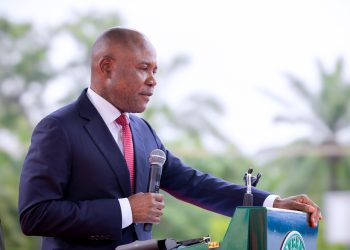
Speaking during an inspection of Aradel Holdings Plc facilities in Ogbele community, Ahoada East Local Government Area of Rivers State on Sunday, NMDPRA Chief Executive, Mr. Saidu Mohammed, highlighted the factors driving this trend. He noted that the nation’s shift towards affordable energy is gaining momentum as supply improvements foster price stability.
“The more supply we have, the lower the price, and this is already evident as petrol has dropped from about N1,000 to N800 per litre due to competition,” Mohammed stated. He explained that the removal of fuel subsidies has allowed market forces to operate effectively, enhancing efficiency in the downstream sector.
“Sustained competition, rather than subsidies, will guarantee adequate supply of petrol and gas at affordable prices for Nigerians,” he added.
Mohammed emphasized the importance of building more refineries with advanced conversion capabilities to produce diesel, fuel oil, naphtha, LPG, and petrol. He outlined Nigeria’s ambition to not only meet domestic needs but also export petroleum products to Africa, Europe, and the Americas. However, he stressed that local demand must be prioritized before scaling up exports.
Reflecting on President Bola Tinubu’s support for a free-market economy, Mohammed recalled that subsidy removal was the president’s first major policy decision. This move has unlocked private sector participation and spurred investments across the oil and gas value chain.
On the state-owned refineries, the NMDPRA boss said their operations remain under the purview of the Nigerian National Petroleum Company Limited (NNPCL). He revealed ongoing engagements with NNPCL to ensure crude oil and petroleum product deliveries to the Port Harcourt and Warri refineries’ reserves.
“Delivery of products to the reserves and restoring loading activities at the refineries will boost local economies and revive product distribution within host communities. Once product loading resumes, Nigerians will begin to feel the economic impact, even before full refinery operations,” Mohammed said.
He further noted that Nigeria’s economic growth hinges on the rapid expansion of locally-owned midstream assets. During his three-day tour of facilities in Rivers State, Mohammed praised the capabilities demonstrated by Nigerian operators, proving they can design, finance, build, and sustain world-class energy infrastructure.
Singling out Aradel Holdings, he commended the company for operating an 11,000-barrels-per-day refinery without foreign involvement. Mohammed disclosed that Aradel’s expansion plans will enable petrol loading from its facility before the end of 2027. The company has also supplied gas to Nigeria Liquefied Natural Gas (NLNG) for about 13 years and runs a virtual gas pipeline for compressed natural gas distribution nationwide.
Urging more investments in refining, Mohammed pointed out that the Dangote Refinery alone cannot satisfy domestic, continental, and global demand. He described the midstream sector as Nigeria’s primary engine for economic growth, capable of stimulating manufacturing, power generation, transportation, and other key areas.
The NMDPRA chief assured that the authority will continue providing regulatory incentives to attract large-scale investments into the midstream sector.
In response, Aradel Holdings Managing Director, Mr. Adegbite Falade, expressed gratitude for NMDPRA’s support and reaffirmed the company’s commitment to expanding refining capacity, commercializing gas, and ending routine gas flaring.
“We are not overwhelmed by rising demand, as the company is already expanding its refining capacity beyond current levels. Aradel aims to be part of the long-term solution to Nigeria’s energy supply challenges. Nigerians should expect continued scaling, local value addition, and prioritization of domestic energy needs,” Falade said.
Recent data supports the downward trend in fuel prices. As of January 19, 2026, the average price of petrol (Premium Motor Spirit) stands at approximately N760 per litre, a notable decrease from previous highs. Diesel is priced at around N908.75 per litre, while LPG averages N840.63 per litre. However, variations exist across depots and filling stations, with some major marketers in Lagos offering petrol as low as N725 per litre.
Despite this positive trajectory, the Central Bank of Nigeria (CBN) has projected that petrol prices could average around N950 per litre over the course of 2026, influenced by market dynamics and potential policy adjustments. Analysts attribute recent fluctuations to factors like depot hikes and import dependencies, but the NMDPRA’s emphasis on competition and local production is expected to stabilize and further reduce costs for consumers.
This development is a welcome relief for Nigerians grappling with economic pressures, as lower fuel prices could ease transportation costs, reduce inflation, and boost overall productivity.
We’ve got the edge. Get real-time reports, breaking scoops, and exclusive angles delivered straight to your phone. Don’t settle for stale news. Join NaijaChoice NEWS on WhatsApp for 24/7 updates →
Join Our WhatsApp Channel