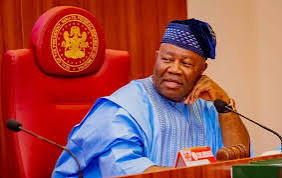
Senate President Godswill Akpabio has given strong assurance that the much-anticipated Electoral Act (Amendment) Bill 2025 will be passed and signed into law well ahead of the 2027 general elections.
Speaking through his Special Adviser on Constitutional Matters, Dr Monday Ubani (SAN), Akpabio said the Senate will immediately consider the bill upon resumption from its Christmas and New Year recess on Monday, January 27, 2026.
Ubani told journalists in Abuja that the leadership of the Red Chamber is targeting passage of the bill and securing President Bola Tinubu’s assent by the first week of February 2026.
“With the House of Representatives already passing its own version, the process is now in its final stages. Once we resume, the Senate will certainly pass it,” Ubani stated confidently.
The assurance comes amid growing pressure from civil society organisations, particularly the AdvoKC Foundation, which had criticised the Senate for proceeding on recess without considering the Electoral Bill despite its national importance.
The group had warned that any further delay could force the Independent National Electoral Commission (INEC) to conduct the 2027 elections under the existing Electoral Act 2022, which many stakeholders say has serious shortcomings exposed during the 2023 general elections.
AdvoKC Foundation described the 2025 Bill as “one of the most far-reaching electoral reform efforts in recent years,” highlighting several key provisions:
- Early release of INEC funding to enable better planning
- Mandatory submission of audited accounts by INEC within six months after each financial year
- Mandatory use of National Identification Number (NIN) for voter registration
- Clearer and more realistic election timelines
- Introduction of early voting for eligible voters
- Expanded voting rights for inmates, who will now be allowed to vote from correctional centres
- Compulsory real-time electronic transmission of election results from polling units to reduce manipulation at collation centres
- Changes to election petition procedures, allowing documentary evidence to be tendered by a single collation officer or legal representative instead of requiring witnesses from every polling unit – a major reform aimed at preventing cases from being dismissed on technical grounds
- Removal of compulsory use of Permanent Voter Card (PVC), as BVAS authentication is the primary verification method
- Earlier conduct of presidential and governorship elections, no later than 185 days before the expiration of the incumbent’s tenure (effectively moving them to November 2026)
- Political parties to submit candidate lists 210 days before election day
Dr Ubani acknowledged that the 2022 Electoral Act, though progressive, revealed major gaps in 2023, especially in result transmission, collation disputes, and protracted litigation.
He emphasised that real-time electronic transmission remains the most critical reform, as it will provide a reliable audit trail for judicial review and drastically reduce human interference.
The Senate President’s aide also disclosed plans to engage media and judiciary correspondents after passage to ensure Nigerians fully understand the new provisions.
Reacting to the assurance, AdvoKC Foundation welcomed the commitment but warned that the coming weeks will test the Senate’s sincerity.
“Assurances are good, but what Nigerians need now is action. The nation is watching. The responsibility lies squarely with the Senate to reconvene, harmonise the versions quickly, and pass this bill in the interest of our democracy,” the group said.
The development has also attracted comments from other quarters. A coalition of over 70 civil society organisations and groups like the Nigeria Civil Society Situation Room have similarly faulted the delay, while former Vice President Atiku Abubakar recently called for urgent amendments to close loopholes exploited in 2023.
Stakeholders note that INEC is legally required to issue the Notice of Election at least one year before polling day. With the 2027 presidential election expected around late February 2027, that notice must be issued by February 2026 – making the Senate’s February target extremely tight but crucial.
If the bill scales through as promised, it will mark a significant victory for electoral reform advocates who have long pushed for a more transparent, technologically driven, and litigation-resistant electoral framework.
We’ve got the edge. Get real-time reports, breaking scoops, and exclusive angles delivered straight to your phone. Don’t settle for stale news. Join NaijaChoice NEWS on WhatsApp for 24/7 updates →
Join Our WhatsApp Channel