Bangladesh authorities have shut down all public and private universities nationwide with immediate effect, advancing the Eid al-Fitr holidays to conserve electricity and fuel amid a severe energy crisis triggered by the United States-Israel war on Iran.
The directive, issued by the Ministry of Education and circulated to university authorities on Sunday, takes effect from Monday, bringing forward the traditional break and leaving most educational institutions closed throughout the Ramadan period. Government and private schools were already shut for the holy month, meaning virtually all academic activities across the South Asian nation of 170 million people have now been suspended.
As previously reported by NaijaChoice News, the escalating conflict in the Middle East has severely disrupted global oil and gas supplies, driving up prices and creating uncertainty for import-dependent countries like Bangladesh, which sources 95 per cent of its energy needs from abroad. Officials said the university closures will slash electricity demand from residential halls, classrooms, laboratories and air-conditioning units while also reducing traffic congestion and the associated fuel wastage.
“The decision has been taken to reduce electricity and fuel consumption considering the current global situation,” the Ministry of Education stated in the circular.
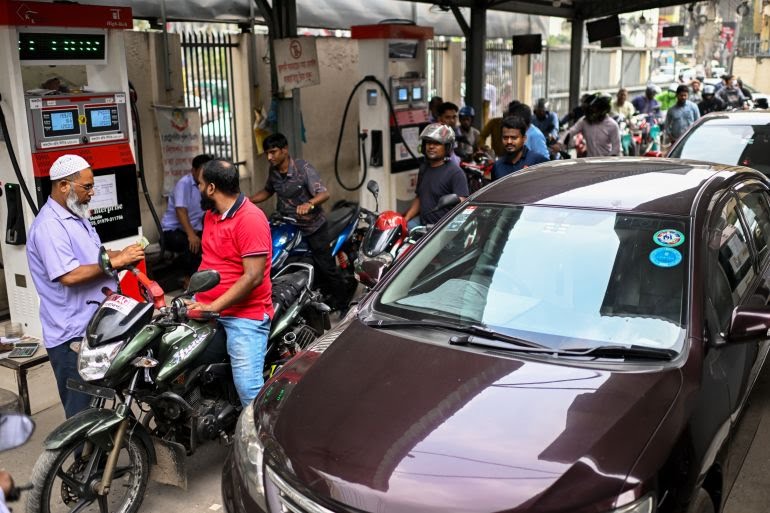
In a related move on Friday, the government imposed daily limits on fuel sales at petrol stations following widespread panic buying and stockpiling. As part of broader austerity measures, foreign-curriculum schools and private coaching centres have also been ordered to suspend operations to further cut power usage. The authorities have issued fresh guidelines urging offices and institutions to maximise natural daylight, switch off unnecessary lights and minimise overall electricity consumption.
The crisis has already forced Bangladesh to halt operations at four of its five state-run fertiliser factories, with available gas redirected to power plants to prevent widespread blackouts. The country has resorted to buying liquefied natural gas (LNG) from the spot market at sharply higher prices while scrambling for additional cargoes to bridge supply gaps.
A senior official in the Ministry of Power, Energy and Mineral Resources told reporters: “We are doing everything we can to reduce consumption and ensure stability in power, fuel and import supplies.”
Energy analysts say the emergency steps may provide short-term relief to the power sector as authorities work to stabilise imports and distribution. However, they warned that prolonged disruption to the academic calendar could affect students if the situation drags on.
No timeline has been given for the reopening of universities, though institutions are expected to resume normal activities after the Eid holidays should the energy situation improve. The development has sent shockwaves across Bangladesh, where reliable electricity and affordable fuel remain critical for daily life and economic stability.
This unfolding crisis serves as a stark reminder of how conflicts far from Africa’s shores can ripple into higher energy costs and supply challenges, a reality Nigeria continues to grapple with despite its own oil-producing status.
We’ve got the edge. Get real-time reports, breaking scoops, and exclusive angles delivered straight to your phone. Don’t settle for stale news. Join NaijaChoice NEWS on WhatsApp for 24/7 updates →
Join Our WhatsApp Channel