Qatar’s Defence Ministry on Monday confirmed its forces downed two Iranian Sukhoi Su-24 Soviet-era bombers amid Iran’s fierce retaliation to US-Israeli airstrikes that have already claimed the life of Supreme Leader Ayatollah Ali Khamenei.
The deadly escalation, marked by relentless attacks, the assassination of Khamenei, and no clear exit strategy, has plunged the region into chaos with global repercussions now hitting home in Nigeria, where energy markets are already feeling the heat.
NaijaChoice News reports that safe havens such as Dubai have come under direct fire, while hundreds of thousands of airline passengers remain stranded worldwide. Oil prices have shot up sharply, US allies are rallying to intercept Iranian missiles and drones, and critical crude flows through the Strait of Hormuz — which handles one-fifth of global oil trade — face serious threats.
Iran had long warned that any attack would drag the entire region into total war, targeting Israel, Gulf Arab states and vital energy infrastructure. All those red lines were crossed on Monday.
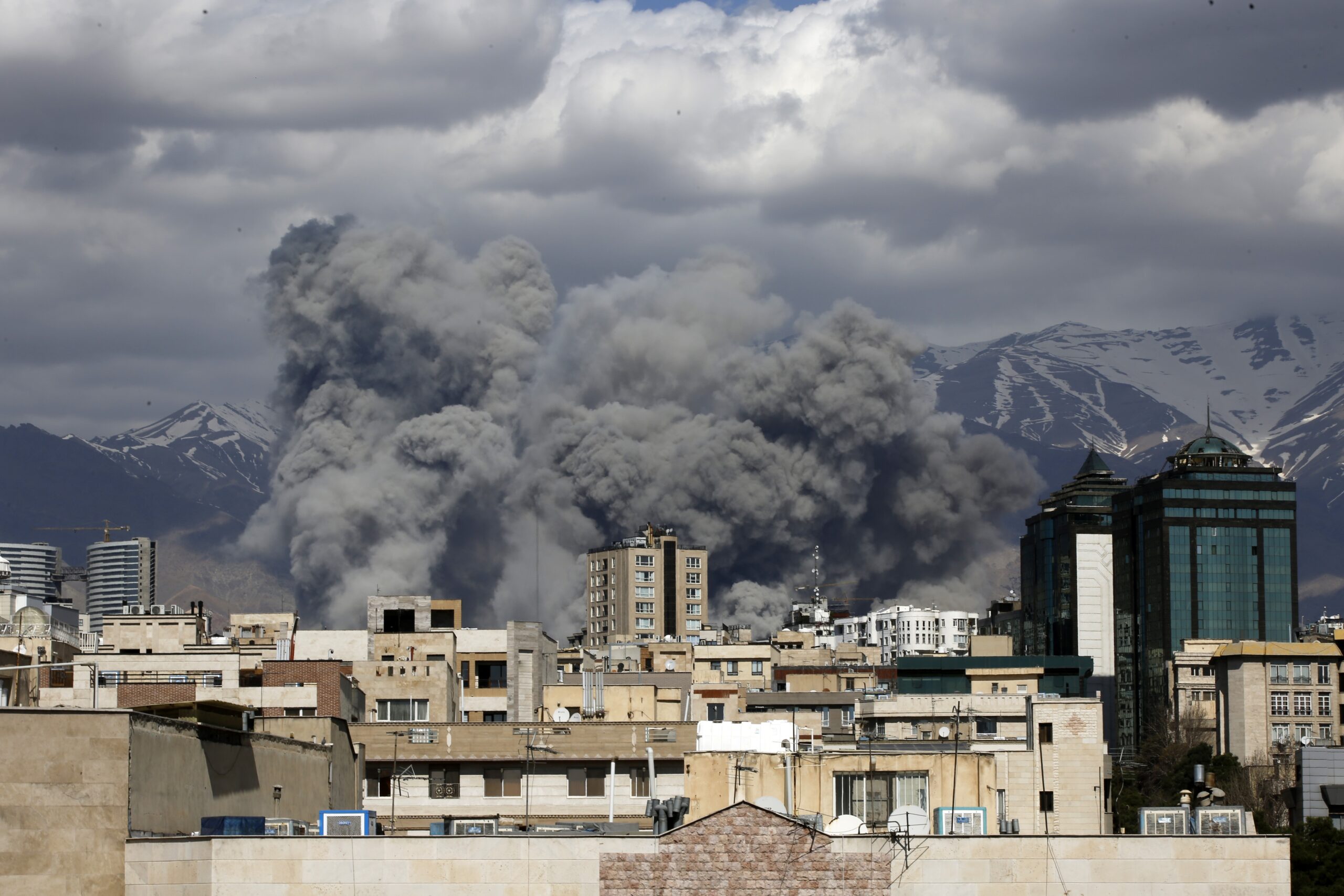
Kuwait mistakenly shot down three American F-15E Strike Eagles during the chaos, though US Central Command confirmed all six pilots ejected safely and are stable. Israel and the United States bombed Iranian missile sites and naval assets, claiming to have destroyed the navy headquarters and sunk multiple warships. Multiple airstrikes rocked Tehran, prompting top security official Ali Larijani to declare on X: “We will not negotiate with the United States.”
Casualties are mounting rapidly. Iran’s Red Crescent Society put the death toll from US-Israeli operations at least 555. In Israel, Iranian missiles killed 11 people. Hezbollah’s response drew Israeli strikes on Lebanon that killed more than two dozen. Four American troops died, with additional fatalities reported in the UAE, Kuwait and Bahrain.
Fire and smoke rose from the US Embassy compound in Kuwait City shortly after American warnings for citizens to take cover. Iran has now expanded its attacks to regional oil facilities. QatarEnergy halted liquefied natural gas production — removing one of the world’s top suppliers from the market — sending European natural gas prices surging 40 percent.
Saudi Arabia’s massive Ras Tanura refinery, with capacity exceeding half a million barrels per day, came under drone attack, though defences intercepted the threats. A drone also struck an oil tanker in the Gulf of Oman, killing one mariner, while debris landed on a Kuwaiti refinery. Several vessels have been hit in the Strait of Hormuz.
“The attack on Saudi Arabia’s Ras Tanura refinery marks a significant escalation, with Gulf energy infrastructure now squarely in Iran’s sights,” said risk analyst Torbjorn Soltvedt of Verisk Maplecroft. “An extended period of uncertainty lies ahead.”
Iran’s ambassador to the IAEA, Reza Najafi, confirmed airstrikes hit the Natanz nuclear enrichment site, dismissing claims of weapons development as “a big lie.” Israel and the US have not confirmed the strike but say they are targeting leadership and nuclear infrastructure. Iran insists its nuclear programme remains peaceful and has not enriched uranium since June. Tehran’s historic Golestan Palace, a UNESCO site, also sustained damage.
Hezbollah fired missiles into Israel early Monday in retaliation for Khamenei’s death — its first claimed attack in over a year. Israel responded with massive strikes on Lebanon, killing at least 31 and wounding 149, according to Lebanon’s Health Ministry. Israeli army chief Lt. Gen. Eyal Zamir vowed to eliminate the threat from Lebanon entirely.
Iraqi Shiite militias also claimed drone attacks on US positions in Baghdad and northern Iraq.
US B-2 stealth bombers struck Iranian ballistic missile facilities, and President Donald Trump announced nine Iranian warships sunk with the navy headquarters “largely destroyed.” Defence Secretary Pete Hegseth insisted the mission is limited: “This is not Iraq. This is not endless.” Yet Trump has mixed nuclear and missile concerns with calls for Iranians to “take over” their government, while signalling openness to new Iranian leadership.
Britain, France and Germany pledged support to stop Iranian attacks, and a drone caused limited damage to a British base in Cyprus.
Tehran’s streets now lie deserted as residents shelter during strikes, with Basij paramilitary forces setting up checkpoints. In Babol, residents reported heavy security presence after Khamenei’s death.
For Nigeria, NaijaChoice News analysis shows this crisis cuts both ways. Brent crude has surged well above the 2026 budget benchmark of $64.85 per barrel, promising higher export earnings, stronger foreign reserves and bigger FAAC allocations. However, with domestic fuel subsidies long gone and refining capacity still limited, pump prices could climb further, fuelling inflation and raising transport and living costs for ordinary Nigerians.
Analysts at the Centre for the Promotion of Private Enterprise (CPPE) and others warn that while revenue gains are possible, persistent oil theft, pipeline vandalism and output hovering around 1.4-1.6 million barrels per day could prevent Nigeria from fully cashing in. Disruptions in the Strait of Hormuz risk broader supply shocks that might eventually dampen global demand.
As the conflict shows no immediate signs of ending, NaijaChoice News will continue tracking developments and their direct impact on Nigeria’s economy, energy security and citizens. The coming days could prove decisive for both the Middle East and oil-dependent nations like ours.
We’ve got the edge. Get real-time reports, breaking scoops, and exclusive angles delivered straight to your phone. Don’t settle for stale news. Join NaijaChoice NEWS on WhatsApp for 24/7 updates →
Join Our WhatsApp Channel