Stakeholders in the Artificial Intelligence sector have converged at a high-level policy dialogue in the Federal Capital Territory, calling for immediate regulation of digital tools to drive productivity while stamping out their exploitation for misinformation, scams and other social vices ravaging the nation.
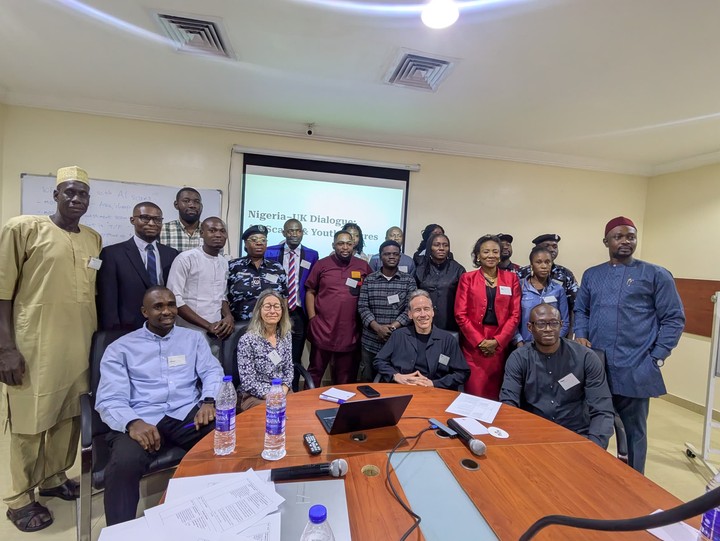
NaijaChoice News reports that the event, titled ‘UK-Nigeria Dialogue on AI, Scams and the Future of the Youths’, was organised under the auspices of the International Science Partnership Fund (ISPF) by researchers from Bangor University, United Kingdom. It formed part of an ongoing international research and policy conversation on AI-enabled cybercrime and its wider societal implications.
Participants expressed deep concern that the rapid advancement of AI presents multifaceted dangers to Nigeria’s teeming youth population, including threats to cognitive and emotional development, disrupted traditional learning, mental health challenges and heightened exposure to sophisticated scams. With AI now deeply embedded in education, social interactions and daily life, experts warned it could erode societal values if left unchecked.
The dialogue highlighted how generative AI tools, such as advanced versions of ChatGPT, now enable fraudsters to produce photorealistic fake documents, convincing deepfake voices and images that make deception easier and more scalable than ever before. Fraudsters, participants noted, are leveraging these technologies to perpetrate voice cloning scams – where AI mimics family members’ voices to demand money – and fake news scams featuring articles that appear from credible sources.
Yet facilitators were unanimous that AI itself is not the enemy but a powerful tool for progress when properly harnessed. They advocated strong collaboration among the Federal Government, civil society organisations, regulators and the private sector to roll out comprehensive training programmes and digital literacy campaigns. The goal, they stressed, is to equip African youths with the skills to thrive in a technology-driven economy while staying protected from its pitfalls.
Prof. Vian Bakir of Bangor University, one of the lead facilitators, drew attention to Nigeria’s literacy challenges, noting that many citizens still struggle to identify deepfakes. “It is a similar situation because people are people. The issue is getting people to understand that there is a problem and that it is a deepfake AI,” she said. “I think that it is time that the government, civil societies and other stakeholders should be concerned by first accepting that there is a problem and share knowledge and make concerted efforts in solving the problem.”
She added a note of caution against over-alarm: “If you simply tell people that deepfakes are everywhere, they may begin to distrust everything, including what is real. That is also dangerous.”
Chiemezie Ugochukwu, PhD researcher at Bangor University and a key facilitator whose ongoing study examines deepfakes in Nigerian youth digital culture, urged the government to adopt a symmetric, inclusive strategy. “We have different languages in Nigeria; the government can start by teaching people about AI in their different languages – it will help,” he emphasised.
Prof. Andrew McStay, Professor of Technology and Society at Bangor University and co-convener, reinforced the need for homegrown solutions. “If AI is going to work for us rather than against us, it must be developed locally, responsibly and inclusively. You have a booming youth population that is smart, educated and capable. The question is whether that talent goes into scams or into building technology that benefits society.”
NaijaChoice News findings align with national data showing Nigeria lost over N1.1 trillion to cybercrime between 2017 and 2023, with AI-powered fraud now accelerating losses. Recent reports also indicate sharp rises in deepfake incidents across Africa, including Nigeria, where voice cloning and synthetic identity scams have surged on platforms like WhatsApp and Telegram.
At the close of the workshop, participants advised Nigerians to remain vigilant against common AI-enhanced scams: voice cloning of relatives, AI-generated fake news articles, and fraudulent schemes involving deepfake videos or documents. They called for sustained, intentional, technology-driven public enlightenment to ensure youths are not only aware of the dangers but also empowered to use AI as a force for good.
The dialogue underscored that with deliberate policy action, multi-stakeholder partnerships and local innovation, Nigeria can turn the AI revolution into a catalyst for youth empowerment rather than a vector for cybercrime.
We’ve got the edge. Get real-time reports, breaking scoops, and exclusive angles delivered straight to your phone. Don’t settle for stale news. Join NaijaChoice NEWS on WhatsApp for 24/7 updates →
Join Our WhatsApp Channel