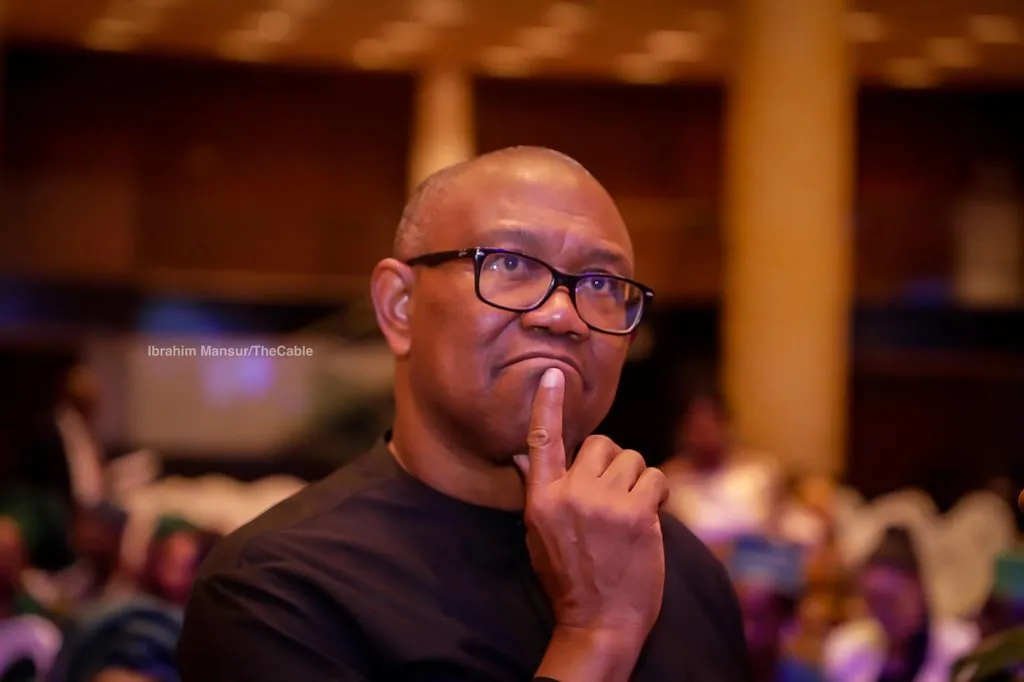
In a scathing critique that has ignited fresh debates across Nigeria, former Labour Party presidential candidate Peter Obi has called out President Bola Ahmed Tinubu for failing to deliver on his bold 2022 campaign pledge to fix the nation’s epileptic power supply. Obi’s remarks, shared on his verified X handle, come at a time when the national grid has suffered multiple collapses, plunging millions into darkness and highlighting the stark contrast between promises made on the campaign trail and the harsh realities facing Nigerians today.
Obi reminded Nigerians of Tinubu’s exact words during the 2023 electioneering: “If I do not provide steady electricity in my first four years, do not vote for me for a second term.” Yet, as Obi pointed out, the grid has already collapsed twice in January 2026 alone, with the month not even over. This follows a dismal 2025, where the grid reportedly failed about 12 times, exacerbating the suffering of households and businesses reliant on inconsistent electricity.
The latest incidents underscore a persistent crisis in Nigeria’s power sector. On January 23, 2026, the grid crashed, dropping generation to a shocking 39MW before partial recovery. Barely four days later, on January 27, another collapse occurred, marking the second major blackout of the year and leaving distribution companies (DisCos) scrambling to blame low generation. Some reports even suggest a third disturbance around January 22, though official confirmations vary. These failures have become all too familiar, with Nigerians enduring widespread outages that disrupt daily life, from powering homes in bustling Lagos to running factories in industrial Oyo State.
Adding fuel to the fire, Obi drew a painful comparison between Nigeria and Turkey, where President Tinubu is currently on a state visit. Turkey, with a population of about 87 million—roughly a third of Nigeria’s estimated 230 million—boasts an installed electricity capacity of over 122,000 megawatts (MW), projected to hit 125,000 MW by the end of 2026. In stark contrast, Nigeria’s installed capacity hovers around 13,000 MW, but actual generation and distribution rarely exceed 4,500-5,000 MW, leaving vast stranded capacity of over 2,000 MW annually due to infrastructure woes. “The contrast is both striking and painful,” Obi lamented in his post, which has garnered thousands of views and reactions.
President Tinubu arrived in Ankara on January 26 for what the State House described as a historic state visit aimed at bolstering bilateral ties in trade, finance, and security. The trip has already yielded promises of $5 billion in Turkish investments into Nigeria, with discussions focusing on training Nigerian Special Forces against insurgents like Boko Haram. However, the visit was marred by an embarrassing incident on January 27, when Tinubu briefly stumbled during a guard of honour inspection alongside Turkish President Recep Tayyip Erdoğan. The Presidency quickly downplayed the mishap, insisting the president is “in great shape” and the visit remains on course. Social media erupted with mixed reactions—some mocking the fall as symbolic of Nigeria’s “collapsing” leadership, while supporters hailed the potential economic gains.
On X (formerly Twitter), the discourse has been heated. Reno Omokri, a vocal Tinubu defender, countered Obi’s criticism by noting that grid failures happen globally, even in the US, and highlighted Nigeria’s recent peak generation of 5,801 MW under Tinubu. But critics like user @Bimdavies1 accused Omokri of making “unintelligent” comparisons, arguing Nigeria’s issues stem from systemic failures, not weather events. Another post from @pinkcornea echoed the frustration: “In Nigeria, ordinary dry season, grid collapse. You should be ashamed.” Humorous takes also surfaced, with @KingDean792622 joking that Erdoğan was “helping the Nigeria national grid not to collapse in his country.”
Obi’s appeal cuts to the heart of Nigeria’s governance woes: “Our appeal is simple: stay at home and confront the nation’s problems. At this rate, we may soon hear of trips to Palau or Vanuatu while critical issues remain unattended at home.” He urged Nigerians to shift focus from the 2027 elections to demanding accountability, warning that persistent bad governance inflicts “indignity and suffering” on the populace.
As the grid stutters and the president globetrots, questions linger: Will Tinubu’s administration turn the tide on power, or will these collapses define his legacy? Nigerians, from the streets of Ibadan to the corridors of Abuja, are watching closely. A new Nigeria, as Obi insists, is possible—but only through collective action and responsible leadership.
We’ve got the edge. Get real-time reports, breaking scoops, and exclusive angles delivered straight to your phone. Don’t settle for stale news. Join NaijaChoice NEWS on WhatsApp for 24/7 updates →
Join Our WhatsApp Channel