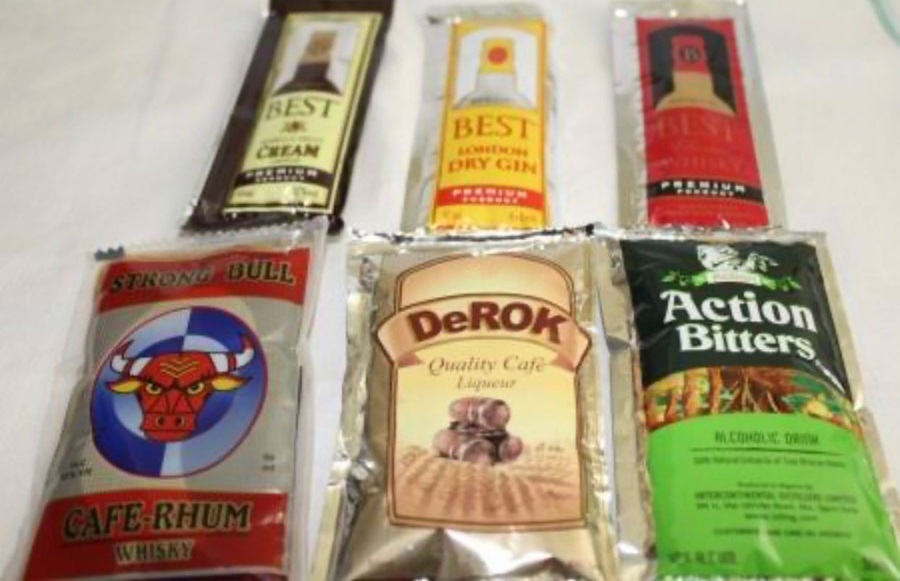
Enforcement of the National Agency for Food and Drug Administration and Control (NAFDAC) ban on alcoholic beverages in sachets and PET bottles below 200ml has triggered fierce backlash, with industry unions warning that it could displace no fewer than 5.5 million Nigerians from their jobs, including 500,000 direct employees in the distillery sector.
Members of the Food, Beverages and Tobacco Senior Staff Association (FOBTOB) and the National Union of Food, Beverages and Tobacco Employees (NUFBTE) — affiliates of the Trade Union Congress (TUC) and Nigeria Labour Congress (NLC) — besieged the NAFDAC Lagos office on Friday in a peaceful protest against the ongoing enforcement.
Executive Secretary of FOBTOB, Solomon Adebosin, addressed protesters: “We are here today to protest the sudden seizure of our companies in the distillery sector by NAFDAC concerning the issue of sachet drinks and PET bottles that are less than 200ml. We have 500,000 Nigerians working directly in this sector and over five million working indirectly, and they are going to be affected.” He stressed that the policy undermines President Bola Tinubu’s Renewed Hope Agenda aimed at attracting investment and argued that NAFDAC’s claims about minors’ access lack empirical backing. “Access and control are what we should be talking about,” Adebosin added, noting ongoing investments in advocacy and sensitisation.
Connect With NaijaChoice News for faster News updates.
- Whatsapp Channel: NaijaChoice News
- X (formerly Twitter): @NaijachoiceNGA
- Telegram: @NaijachoiceNGA
Head of Department, Brewery and Tobacco, NUFBTE, Azeez Razaq, described the actions as “sabotage of the growth of indigenous manufacturers” and accused NAFDAC of violating the Secretary to the Government of the Federation (SGF)’s earlier directive for a stay of action. He warned that mass job losses could worsen insecurity.
Reading the unions’ demands, FOBTOB member Anthony Oyagha urged: “We call on the Presidency to urgently intervene to ensure that NAFDAC aligns its actions with government policy, legislative oversight, and the broader national interest. Local manufacturers deserve honour, protection, and partnership, not punitive measures that destroy investments, livelihoods, and confidence in Nigeria’s business environment.”
Background and Timeline
NAFDAC announced plans on November 11, 2025, to enforce a total ban by December 2025, following a Senate directive. Enforcement was temporarily suspended by the SGF pending consultations, but NAFDAC Director-General, Prof. Mojisola Christianah Adeyeye, confirmed in a recent media briefing that the agency received a fresh “matching order” from the Senate and has commenced nationwide enforcement.
NAFDAC’s Position and Health Concerns
NAFDAC defends the ban as a protective public health measure, not punitive. The agency highlights that cheap, high-strength sachet alcohols (often sold for as low as N100) are easily accessible, concealable, and affordable, leading to misuse by minors, commercial drivers, and vulnerable groups. Cited risks include alcohol addiction, poisoning, road accidents, domestic violence, school dropouts, and long-term health issues. The move aligns with Nigeria’s commitment to the WHO Global Strategy to Reduce the Harmful Use of Alcohol.
Prof. Adeyeye stated: “This ban is not punitive; it is protective. It is aimed at safeguarding the health and future of our children and youth. The decision is rooted in scientific evidence and public health considerations. We cannot continue to sacrifice the well-being of Nigerians for short-term economic gain.”
Economic Stakes and Industry Counter-Arguments
Unions and stakeholders insist the ban threatens massive investments (reports cite figures between N1.9 trillion and over N2 trillion in machinery, production lines, and related sectors) and could trigger business closures, loan defaults, and heightened insecurity. They advocate for stricter regulation, age verification, and targeted controls rather than an outright ban.
Health advocacy groups and some senators back the enforcement, while manufacturers argue it favours imports or larger players and kills local jobs without solving underlying social issues.
The unions have called on President Tinubu to intervene decisively to protect indigenous industries and prevent what they describe as external interests from undermining Nigeria’s manufacturing base. As enforcement intensifies, the standoff pits public health priorities against economic survival and job security in one of Nigeria’s key informal-heavy sectors.
We’ve got the edge. Get real-time reports, breaking scoops, and exclusive angles delivered straight to your phone. Don’t settle for stale news. Join NaijaChoice NEWS on WhatsApp for 24/7 updates →
Join Our WhatsApp Channel