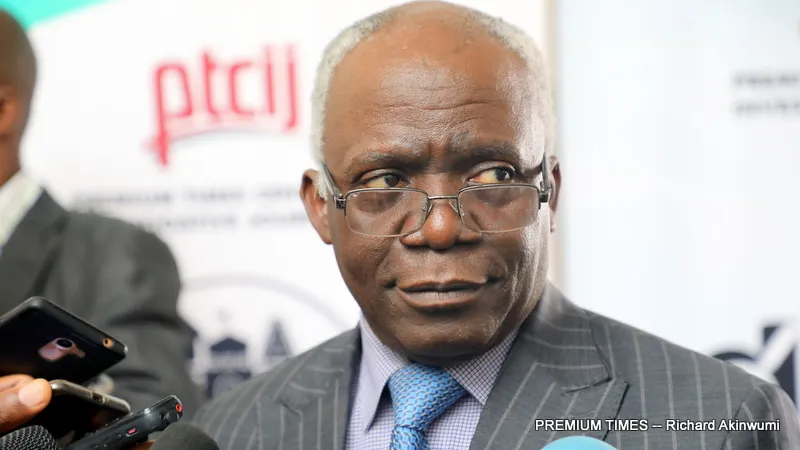
- Falana, Utomi, Bugaje Kick Against Rejection Of E-Transmission Of Results
The brewing storm over Nigeria’s Electoral Act Amendment Bill 2026 escalated yesterday as a coalition of prominent activists under the Movement for Credible Elections (MCE) unleashed scathing criticism against the Senate for stripping out mandatory electronic transmission of election results, branding it a “deliberate democratic sabotage” that threatens the integrity of the 2027 general elections.
In a fiery statement issued in Abuja, the MCE – a newly formed alliance of civil society heavyweights – demanded the immediate reinstatement of the clause and full disclosure of senators who voted against it. The group’s media coordinator, Comrade James Ezema, accused the upper chamber of prioritizing “elite conspiracy” over the people’s will, warning that the decision could fuel voter apathy and extrajudicial vote-buying in courts.
The controversy, which has gripped the nation’s political discourse, centers on Clause 60(3) of the bill, which originally proposed real-time electronic uploads of results from polling units to the Independent National Electoral Commission’s (INEC) IReV portal – a safeguard credited with curbing the rampant manipulations seen in past polls. However, during the Senate’s third reading last week, the chamber voted to retain discretionary powers for INEC, removing the “mandatory real-time” wording amid debates over network failures in remote areas.
Connect With NaijaChoice News for faster News updates.
- Whatsapp Channel: NaijaChoice News
- X (formerly Twitter): @NaijachoiceNGA
- Telegram: @NaijachoiceNGA
MCE: ‘This Is Not Lawmaking, It’s Electoral Corruption in Disguise’
The MCE, steered by a formidable lineup of Nigeria’s democracy champions including Dr. Usman Bugaje, Prof. Pat Utomi, Comrade Ayuba Wabba, Dr. Oby Ezekwesili, Mr. Femi Falana (SAN), Ambassador Nkoyo Toyo, Hajia (Dr.) Bilikisu Magoro, Comrade Ene Obi, Comrade Salisu Mohammed, and Comrade Bala Zakka, pulled no punches in their Abuja declaration.
“We categorically reject the decision of the National Assembly through the Senate to remove and refuse the mandatory electronic transmission of election results,” the statement read. “This action is a direct attempt to subvert the right of Nigerians to freely choose their leaders. By rejecting mandatory transmission… the National Assembly has chosen opacity over transparency, manipulation over credibility, and elite conspiracy over the sovereign will of the people.”
The coalition likened the move to defending a “system that thrives on electoral corruption, stolen mandates, and manufactured elections,” insisting there is “no acceptable justification” beyond lawmakers’ fear of genuine voter mandates. They highlighted how the status quo – vulnerable to tampering between polling units and collation centers – could exacerbate apathy, erode public trust, and turn courts into “tools of mandate purchase by the highest bidders.”
In a rallying cry, MCE urged allies to shun any rollback of planned protests, mobilizing for the “Occupy NASS” mass action in Abuja. “As we converge in Lagos on Monday, 9th February… we call on Nigerians everywhere – students, workers, traders, professionals, women, youth, community leaders, the media, and the international community – to stand up and speak out,” the statement concluded.
This outcry echoes broader civil society fury, with the Nigeria Civil Society Situation Room labelling the Senate’s passage of the bill a “sharp critique” that undermines reforms. Opposition voices, including the PDP, have decried it as a threat to 2027’s credibility, while Senate minorities insist electronic transmission remains intact – just not enforced in real-time. Online, Nigerians are abuzz, with threads dissecting the “loophole” and calls for shutdowns gaining traction on platforms like X.
Akpabio: ‘We Will Not Be Intimidated – Technology Must Not Endanger Democracy’
Pushing back amid the uproar, Senate President Godswill Akpabio declared during the public presentation of Senator Effiong Bob’s book, The Burden of Legislators in Nigeria, at the NAF Centre in Abuja, that the National Assembly remains undeterred.
“We will not be intimidated. We will do what is right for Nigeria and not that of one NGO,” Akpabio fired, in an apparent jab at critics like the Policy and Legal Advocacy Centre’s (PLAC) Clement Nwankwo. He dismissed the frenzy over Section 60(3) as premature, noting the amendment process – including harmonization and votes-and-proceedings – is ongoing, with room for tweaks.
“All we said is remove the words ‘Real-time’ to allow INEC decide the mode of transmission,” Akpabio explained. “If you make it mandatory and the system fails, there will be a catastrophe… Real-time means that there will be no election results in nine states where there is no network, or any part of the country where there is a grid breakdown.”
The Senate helmsman emphasized that technology should “save and not endanger democracy,” pointing to Nigeria’s patchy infrastructure – from power outages to rural connectivity gaps – as rationale for flexibility. “Why abuse the Senate when what we have is incomplete?” he queried, leaving the door ajar for conference committee adjustments.
Supporters, including Senator Victor Umeh, hailed the unanimous approval of electronic transmission (sans real-time mandate) as a win, arguing it empowers INEC without risking total shutdowns.
A Familiar Battle: From 2023 Glitches to 2027 Fears
This clash revives ghosts of the 2023 elections, where INEC’s IReV glitches and delayed uploads sparked lawsuits and eroded faith, with over 1,000 petitions filed post-polls. The 2022 Electoral Act had introduced e-transmission but left it optional, a “flexibility” critics say enabled the very frauds it aimed to prevent.
As earlier reported by NaijaChoice News, the bill’s journey has been tortuous, with the House of Representatives pushing stronger transparency clauses that the Senate watered down. Now, as the National Assembly finalizes amendments to govern the 2027 polls – including voter accreditation tweaks and stiffer vote-buying fines – fears mount that opacity could breed more “magu magu” (manipulated) outcomes, as decried by activists.
Election observers warn that without mandatory uploads, the space between polling units and collation remains a hotbed for interference, potentially inflating apathy rates already hovering at 40% among youth. As MCE’s Lagos convergence looms, the question lingers: Will Nigerians’ push for credible polls force a U-turn, or cement another cycle of contested mandates?
We’ve got the edge. Get real-time reports, breaking scoops, and exclusive angles delivered straight to your phone. Don’t settle for stale news. Join NaijaChoice NEWS on WhatsApp for 24/7 updates →
Join Our WhatsApp Channel