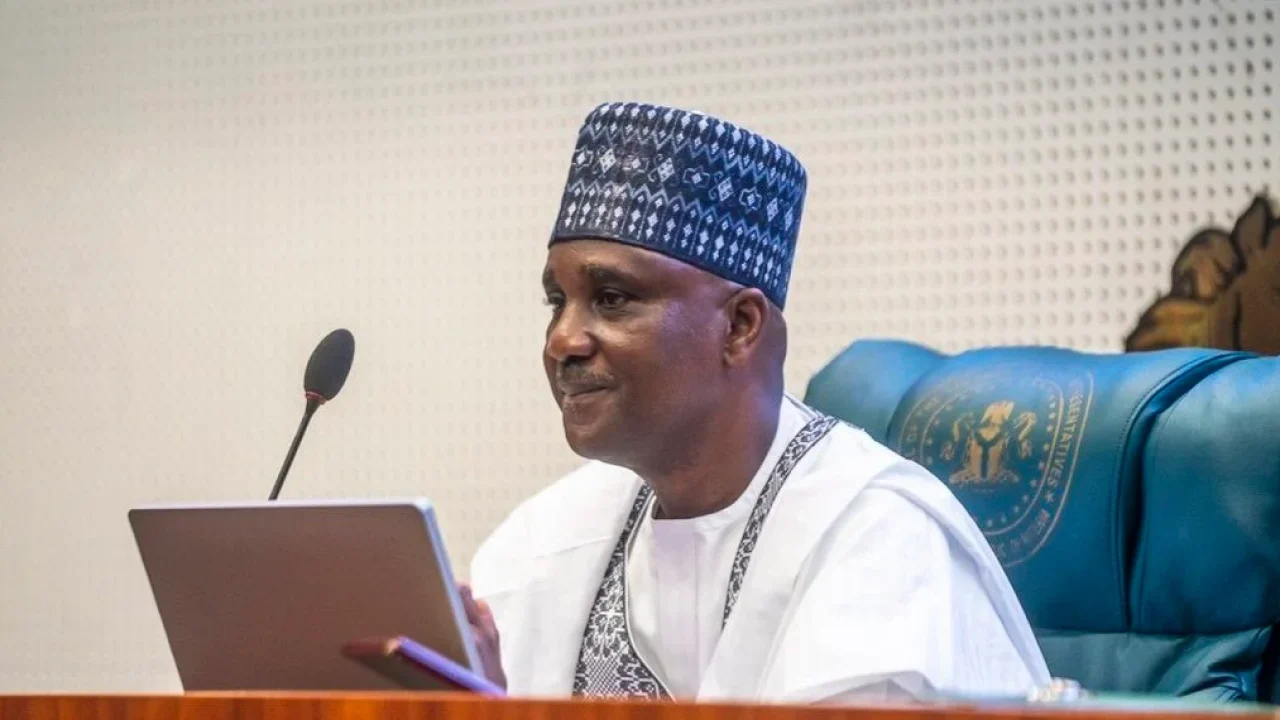
The Speaker made the clarification on Sunday during a courtesy visit by the Ambassador of Spain to Nigeria, Ambassador Felix Costales, at his office in the National Assembly Complex, Abuja.
NaijaChoice News reports that Abbas stressed Nigeria’s infrastructure realities, particularly limited internet coverage and unstable power supply, make exclusive real-time electronic transmission unfeasible nationwide. He cited NCC data indicating that nearly 40 per cent of the country’s territories remain underserved by reliable internet services, even in urban centres like Abuja where connectivity frequently falters.
“Sometimes, people scream far beyond the exact level of the issue. A lot of people think that we need to embrace electronic transmission in real-time in Nigeria, but within the very little period that you’ve been in Nigeria, you should be able to speak on the quality of our internet network,” Abbas told the envoy.
Connect With NaijaChoice News for faster News updates.
- Whatsapp Channel: NaijaChoice News
- X (formerly Twitter): @NaijachoiceNGA
- Telegram: @NaijachoiceNGA
He warned that a purely electronic system would exacerbate voter apathy, noting that even under the existing manual arrangement, turnout hovers around low levels, with only a fraction of the over 93 million registered voters participating in recent polls. Introducing full electronic transmission, he argued, risks shutting out millions in underserved areas, leading to the lowest voter participation ever recorded.
“That is why we said, in our wisdom, the Electoral Act should be hybrid—a combination of both the manual and electronic systems. Where it is feasible to use the electronic transmission, use the electronic transmission; where it is not possible, use the manual,” the Speaker declared.
The meeting was attended by key House leaders, including Chairman of the Committee on Appropriations, Abubakar Bichi; Chairman of the Committee on Foreign Affairs, Wole Oke; and Chairman of the Nigeria-China Parliamentary Friendship Group, Jafaru Yakubu. A statement by Abbas’ Special Adviser on Media and Publicity, Musa Krishi, confirmed the details.
Ambassador Costales, in response, noted that Spain itself operates a system allowing manual transmission of results where necessary, reinforcing the hybrid model’s reasonableness. He pledged Spain’s continued support for strengthening Nigeria’s democratic institutions through legislative diplomacy and technical collaboration.
Abbas assured the envoy that close engagements with the Independent National Electoral Commission (INEC) under its new Chairman, Professor Joash Ojo Amupitan, SAN, will deliver more credible, transparent, and inclusive polls in 2027. He described democracy as a gradual process requiring steady improvement election after election, while welcoming Spain’s guidance on legislative drafting and best practices.
President Bola Tinubu had assented to the Electoral Act (Amendment) Bill 2026 on February 19, 2026, barely 24 hours after the National Assembly harmonised the contentious provisions following heated debates and protests.
The new law authorises electronic transmission where infrastructure permits, with manual collation and declaration serving as the legal fallback in cases of network failure or power outages – a direct response to the technical glitches that marred result uploads during the 2023 general elections.
The reform has divided stakeholders. Supporters hail it as pragmatic, given Nigeria’s digital divide and energy challenges. Critics, including civil society organisations like YIAGA Africa and some opposition voices, contend that the manual option could weaken transparency and open doors to manipulation if not strictly monitored.
INEC Chairman Professor Amupitan has, however, assured Nigerians of robust preparations, promising that technical failures will not recur under his watch and that the 2027 elections will rank among the most credible in the nation’s democratic journey.
Abbas emphasised that critics, being Nigerians who travel across the country, fully understand these infrastructural limitations. He called for consensus-building, noting that political polarisation is a global challenge, as acknowledged by the Spanish envoy who highlighted Spain’s own experiences with compromise in governance.
We’ve got the edge. Get real-time reports, breaking scoops, and exclusive angles delivered straight to your phone. Don’t settle for stale news. Join NaijaChoice NEWS on WhatsApp for 24/7 updates →
Join Our WhatsApp Channel