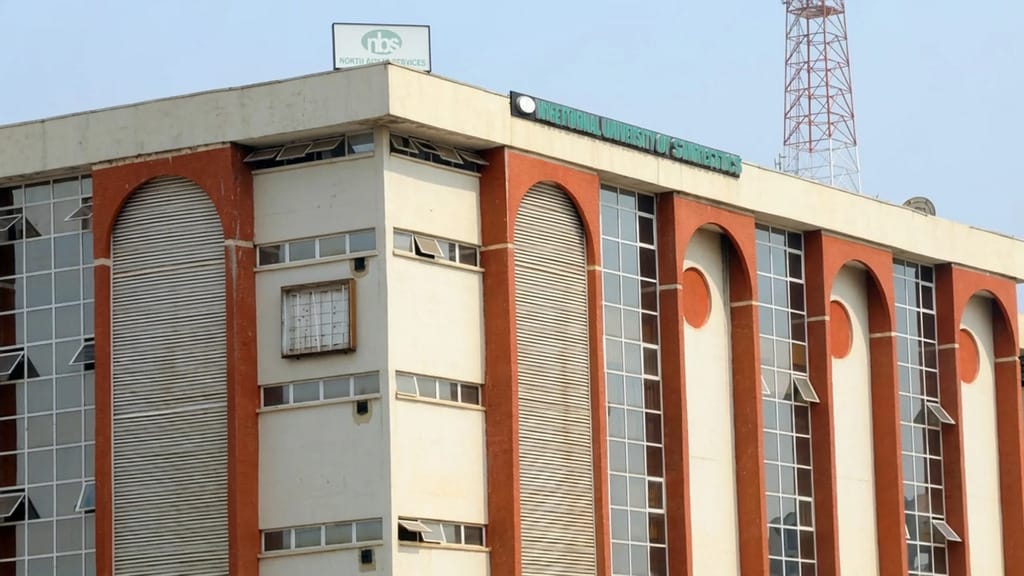
LAGOS, Nigeria – Lagos State has emerged as the most indebted state in Nigeria, recording a total of N1.22 trillion in domestic debt and $1.17 billion in external debt as at the fourth quarter of 2025.
The National Bureau of Statistics (NBS) disclosed this in its Nigeria’s Q4 2025 Domestic and External Debt Report released on Monday. The report shows the country’s total public debt stock rose to N159.28 trillion ($110.97 billion) in Q4 2025, up from N153.29 trillion ($103.94 billion) in the third quarter, representing a 3.90 per cent increase quarter-on-quarter.
Total external debt stood at N74.43 trillion while domestic debt was N84.85 trillion. External debt accounted for 46.73 per cent of total public debt (in naira terms), while domestic debt made up 53.27 per cent.
Among the sub-nationals, Lagos maintained a commanding lead in domestic indebtedness with N1.22 trillion, followed by Rivers State at N378.81 billion. Jigawa State recorded the lowest domestic debt at N1.60 billion, followed by Ondo State with N8.42 billion.
Lagos also topped the external debt chart with $1.17 billion, ahead of Kaduna State’s $684.29 million. The Federal Capital Territory (FCT) posted the lowest external debt at $26.80 million, followed by Zamfara State at $41.93 million.
Other states carrying significant debt burdens include Bauchi with $220.57 million external and N156.05 billion domestic; Delta with $63.42 million external and N248.83 billion domestic; and Enugu with $99.88 million external and N157.60 billion domestic.
NaijaChoice News reports that the rising debt profile, particularly at the subnational level, continues to raise serious concerns among Nigerians as debt servicing exerts mounting pressure on government revenues and limits funds available for critical development projects.
Early this month, the World Bank warned that Nigeria’s escalating debt service costs are severely constraining the government’s ability to fund infrastructure. The bank noted a sharp decline in capital spending to 1.0 per cent of GDP in 2025 from 1.3 per cent in 2024, as debt obligations crowd out productive investment.
The World Bank’s International Debt Report 2025 further stressed that Nigeria and other Sub-Saharan African countries must urgently pursue export diversification and comprehensive fiscal reforms to tackle rising debt challenges. It observed that debt levels and servicing burdens in the region have continued to climb despite subdued economic growth, highlighting persistent fiscal stress.
Lagos State’s high debt is largely attributed to its aggressive infrastructure drive, including major transportation projects such as the Lagos Rail Mass Transit, road networks, housing initiatives, and urban renewal programmes aimed at sustaining its position as Nigeria’s economic powerhouse. The state has consistently utilised both domestic bonds and external facilities to bridge its huge infrastructure deficit.
However, experts warn that with debt service obligations consuming a growing share of revenues nationwide, both federal and state governments must prioritise prudent borrowing, revenue enhancement, and efficient project implementation to avoid compromising long-term economic stability and citizen welfare.
The latest figures from the NBS and Debt Management Office (DMO) underscore the need for stronger fiscal discipline across all tiers of government as Nigeria grapples with balancing development needs against mounting debt sustainability concerns.
We’ve got the edge. Get real-time reports, breaking scoops, and exclusive angles delivered straight to your phone. Don’t settle for stale news. Join NaijaChoice NEWS on WhatsApp for 24/7 updates →
Join Our WhatsApp Channel