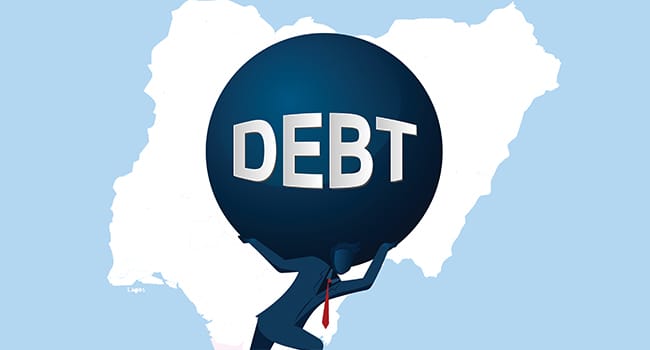
The Debt Management Office released the latest figures on Tuesday, showing a quarter-on-quarter increase of N5.98 trillion, or 3.9 per cent, from N153.29 trillion at the end of September 2025.
NaijaChoice News reports that the debt stock rose by N14.61 trillion, or 10.1 per cent, compared to N144.67 trillion in December 2024. In dollar terms, it moved from $94.23 billion to $110.97 billion.
Domestic debt remained the biggest slice of the total, accounting for 53.27 per cent. It grew to N84.85 trillion from N81.82 trillion in September, a 3.7 per cent quarterly rise, and from N74.38 trillion a year earlier.
The Federal Government carried N80.49 trillion of domestic debt, equal to 50.53 per cent of overall public debt, while states and the FCT held N4.36 trillion. In dollar terms, domestic debt stood at $59.12 billion.
External debt reached N74.43 trillion, or 46.73 per cent of the total. It increased by N2.95 trillion from the September level and by N4.14 trillion from December 2024. The Federal Government accounted for N66.27 trillion of external loans, with states and the FCT at N8.16 trillion.
The DMO said the December figures are provisional. They were converted at the Central Bank of Nigeria’s official rate of N1,435.2571 to the dollar, while September data used N1,474.85.
Despite the rise, the overall debt mix stayed largely unchanged. Domestic debt was 53.27 per cent in December against 53.37 per cent three months earlier, while external debt held steady at 46.73 per cent.
The sustained reliance on the domestic market reflects the government’s strategy to finance fiscal gaps without heavy dependence on foreign loans. Yet analysts continue to watch the impact on debt servicing, which already consumes a large share of national revenue.
DMO Director-General Patience Oniha has stressed the need to focus more on revenue mobilisation. She noted that borrowing must support development while protecting fiscal space for critical spending on infrastructure and social services.
All new borrowings require National Assembly approval, a process designed to ensure transparency and sustainability. Lawmakers scrutinise terms and implications before any deal is sealed.
For ordinary Nigerians, the rising debt stock raises questions about long-term pressure on the budget. With revenue reforms still unfolding, the challenge remains to grow the economy faster than the debt so that funds can flow to roads, power, health and education rather than interest payments.
The DMO maintains that Nigeria’s debt remains within manageable limits for now. But the latest numbers underline the urgent need to balance borrowing with stronger domestic earnings.
We’ve got the edge. Get real-time reports, breaking scoops, and exclusive angles delivered straight to your phone. Don’t settle for stale news. Join NaijaChoice NEWS on WhatsApp for 24/7 updates →
Join Our WhatsApp Channel